

The Airbus A321XLR has completed its first commercial flight with Iberia as part of entry into service plans.
The aircraft operated a flight between Madrid-Barajas International Airport (MAD) and Paris-Charles de Gaulle Airport (CDG) as part of familiarisation flights.
EC-OIL is the registration of the first A321XLR, which was delivered to the airline just last week as part of Airbus’ process to get its new A321neo derivative in the air.
Iberia wasn’t initially the launch operator; Aer Lingus was meant to take that mantle, and before then, it was Middle Eastern Airlines (MEA). However, as Iberia and Aer Lingus are both part of the International Airlines Group and there were pilot issues at the Irish company, IAG made a last-minute switch.
Upon delivery, Iberia is now conducting a multi-week process to familiarise itself with the new aircraft by deploying it across shorter routes, allowing the crew to understand its capabilities.
Familiarisation efforts are very common for new aircraft, and they typically last a short period before eventually being deployed on the routes that they were intended to.
In Iberia’s case, they’ll initially be sending their A321XLR to Paris and London Heathrow as part of these crew familiarisation efforts before the first US destination, which has already been announced as Boston Logan, commences.
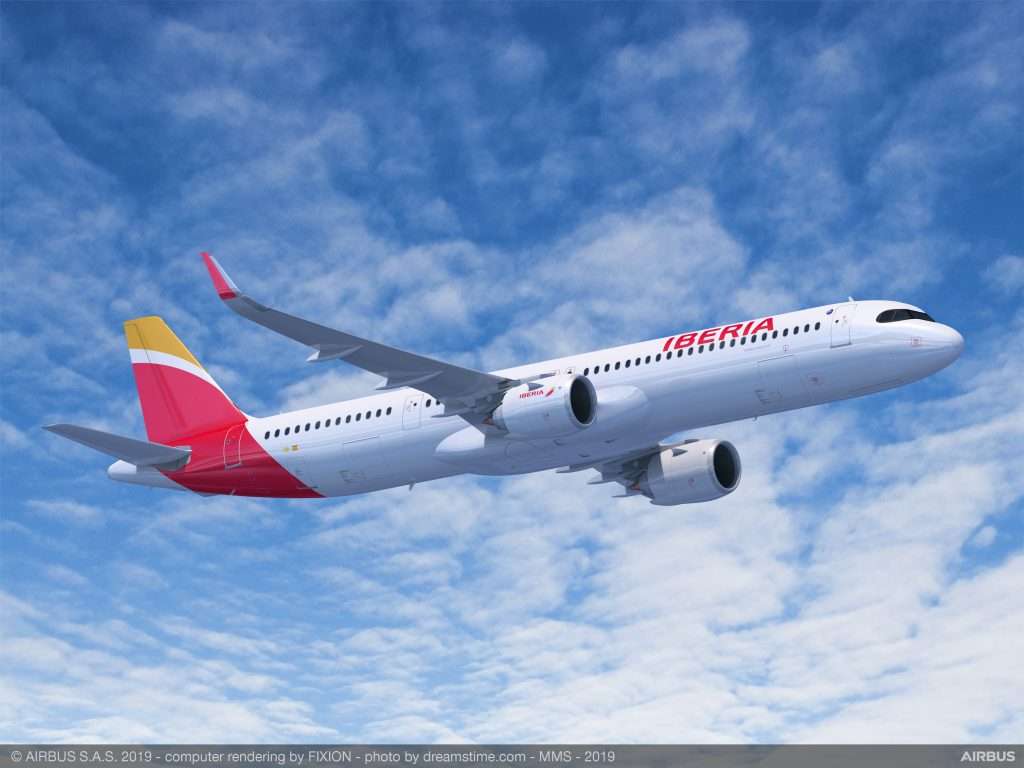
The A321XLR is expected to thrive on Transatlantic flying for operators such as Iberia. It will be one to watch as it eases pressures for airlines with their existing widebody flying.
Why Do Airlines Love The A321XLR?
Airlines worldwide are embracing the capabilities of the A321XLR offered by Airbus for many reasons.
However, one fundamental reason is its ability to fill a unique niche market by offering extra-long-range capabilities to airlines worldwide.
These range capabilities allow airlines to launch new long-haul routes all with a single-aisle plane, which, while having less capacity than a widebody, can do so for airlines with greater flexibility and cheaper costs.
Airlines are targeting this efficiency across longer flights by seeking to fly to smaller cities that still require service but may not need a widebody.
For example, United sees the aircraft as an important pillar of its 757 replacement efforts and will deploy it towards smaller markets requiring service.
Ultimately, this variant offers excellent flexibility to support airlines with very versatile networks nowadays. Its commonality with the A320 family also means reduced costs in optimising its overall business.

ABOUT THE AUTHOR
Daniel Fowkes is a Melbourne-based aviation analyst and journalist with over a decade of industry experience. As founder of Dj’s Aviation, he delivers trusted analysis on aircraft, airline strategy and global aviation trends for djsaviation.net
Related Articles




Stay Informed
Get the latest aviation news, analysis and route updates delivered to your inbox.
We respect your privacy. Unsubscribe at any time.
Enjoyed this story?
Make us your go-to for aviation news
Add us as a preferred source on Google and see our latest stories first in Top Stories.
Add Us On Your News Feed