
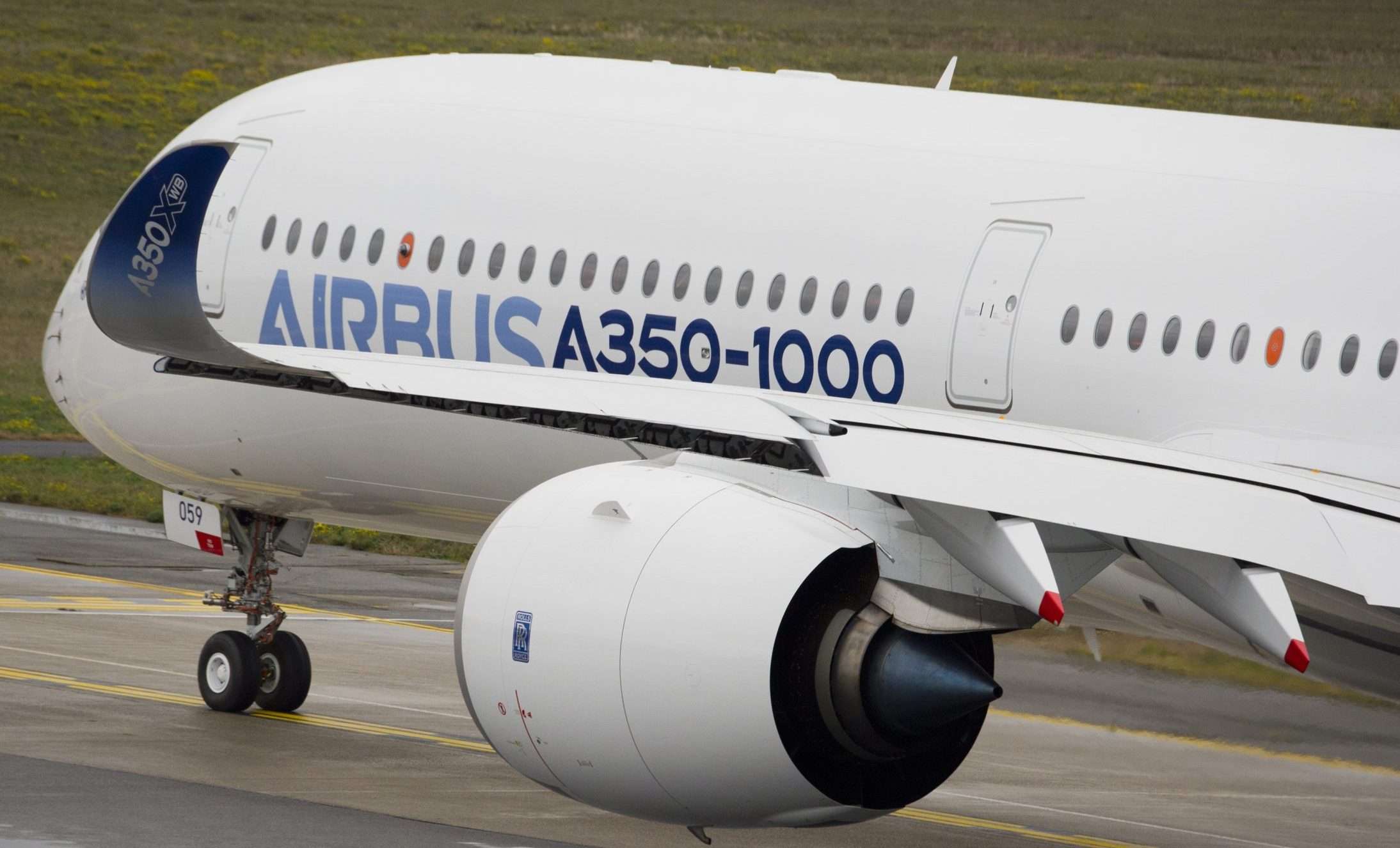
The Airbus A350 entered service in the mid-2010s, and since then, the aircraft has become a leader in the widebody scene.
Airbus has continued to look to develop the A350 to take more market share away from competitor Boeing and also provide solutions to airlines’ requirements.
The A350-2000, also known as the A350 Stretch, has been thrown around as a prospective new variant in the family to aid future replacement efforts.
However, such an aircraft hasn’t happened. Instead, Airbus is sticking to what it knows and exploring alternative pathways to secure more market share.
What Is The Airbus A350-2000?
A prospective Airbus A350-2000 would, in essence, be a stretch on the A350-1000 and look to add capacity for customers seeking more seats across key markets.
The A350-1000, which can accommodate some 400 passengers, give or take, is considered the perfect high-capacity alternative for long-haul flying. However, the prospective A350-2000 offered something different.
Such a variant would address any potential concerns surrounding the replacement of the A380 and 747-8, which will be exiting airline fleets across the next decade.
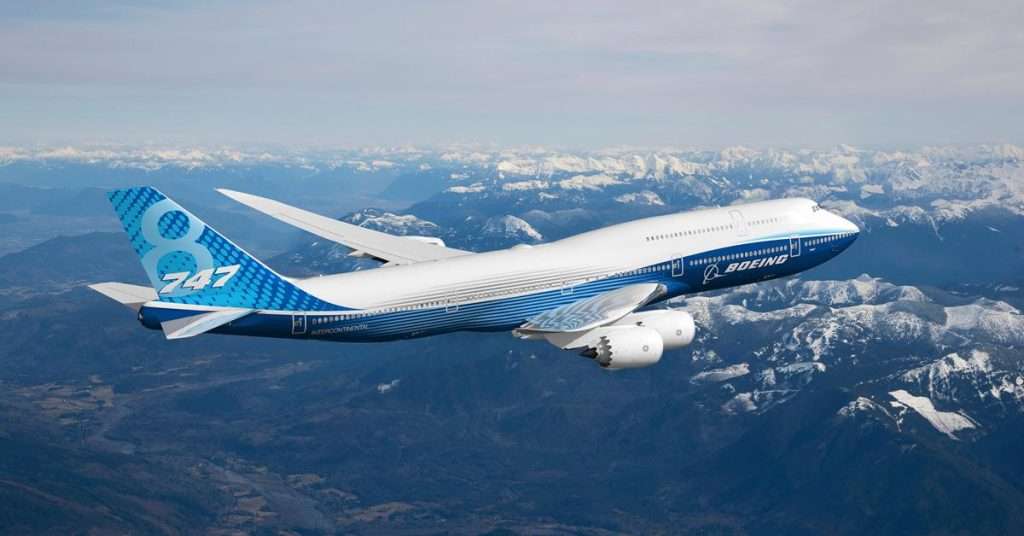
The variant has long been rumoured to be four metres longer and capable of seating 50 additional passengers if all economy offered great prospects to airlines.
However, while proposed in the mid-2010s, this variant didn’t progress at the rate of other derivates, which would eventually be green-lit.
But why did the aircraft variant that seemed to be of interest to Airbus essentially fail and fade into obscurity?
Airbus Priority Elsewhere
One of the primary reasons why an A350-2000 didn’t eventuate was driven by Airbus’ priorities as the 2010s developed, especially as the 2020s arrived.
At one point, the planemaker was in a position where the A350 had only just entered service and enjoyed substantial success. Therefore, finding ways to grow that success was essential moving forward.
As a result, studies very early on began looking into how the planemaker could develop the aircraft further. This included but was not limited to just the A350-2000, with some talk also sitting on a prospective A350neo early on in the programme’s life.
However, with two available variants, the development of the A350ULR for Singapore Airlines and other prospective ideas, the manufacturer says its priorities begin to shift.
As the 2010s came to a close, the A350-2000 seemed less like an optimal choice. When the 2020s arrived, a global pandemic decimated traffic and Airbus found itself in a preservation mode, with output dropping and airlines halting orders.
While the A350 series and even the already existing A350-1000 were always needed as the high-capacity alternative, Airbus began examining other means to advance the programme.
The A350-1000ULR & A350F
The advancement of the A350 programme over the last half decade has been noticeable through two primary variants: the A350-1000ULR and A350F.
Airbus’ own A350-1000ULR is being specifically built for Australian flag carrier Qantas and its Project Sunrise ambitions. This order came about as part of the airline’s call for manufacturers to offer a true ultra-long haul and efficient widebody.
Qantas will use the A350-1000ULR on flights from Sydney to London and Sydney to New York without a single stop, pushing the limit of nonstop travel while keeping economy class present.

Once delivered to the carrier, the A350-1000ULR is a perfect example of slightly amending the aircraft without reworking too much to ensure it can still provide a solution to airlines requiring something different.
The A350F is another perfect example of the planemaker’s attempt to enter another market and excel; the freighter is part of the next generation in cargo offerings and is the manufacturer’s attempt to compete with Boeing for the first time.
While the A350-2000 may not have been launched, the variants above increase the overall reliance on the A350 and its purpose for companies.
These variants will be successful for their purpose. However, it won’t deter away from the already base variants that continue to see orders come in and Airbus continue to deliver.
Did The A350-2000 Fail?
So, did the A350-2000 fail? This is not necessarily the case when analysing why the planemaker decided not to proceed with this variant.
While adding capacity to the A350-1000 could have solved some airlines’ replacement efforts and attempts to offer high-capacity planes across key routes, studies showed greater possibilities for the planemaker.
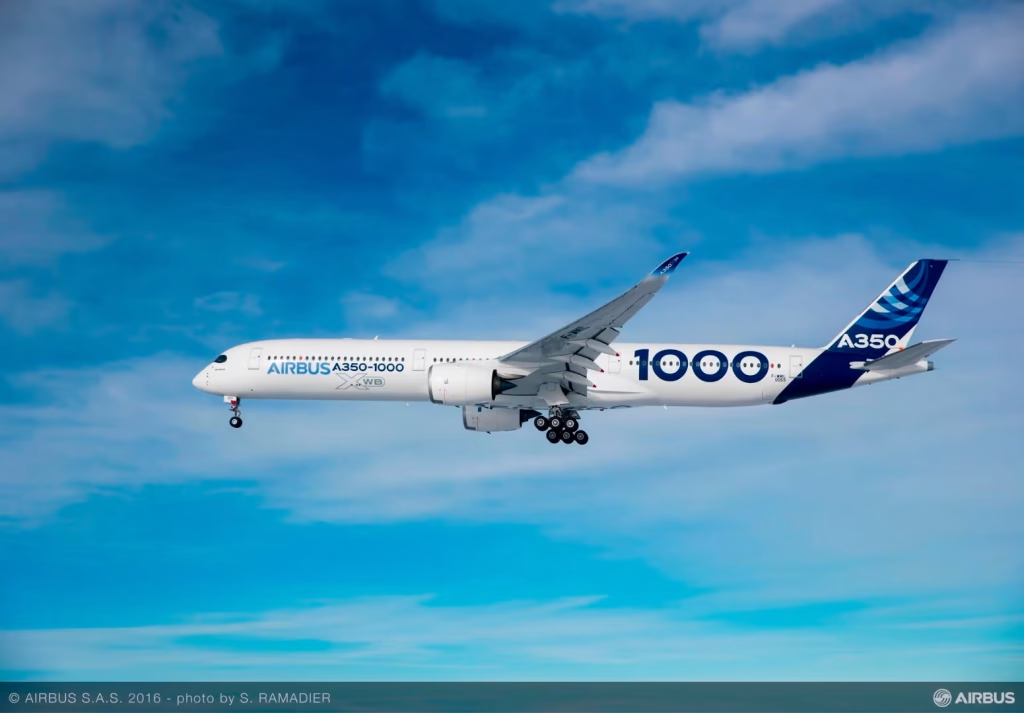
The A350F and A350-1000ULR will complement the A350 programme in multiple ways, providing solutions to operators while complementing the base models.
Other factors, such as the industry’s complex climate, have deterred some further derivates from taking shape, and the focus has shifted elsewhere.

ABOUT THE AUTHOR
Daniel Fowkes is a Melbourne-based aviation analyst and journalist with over a decade of industry experience. As founder of Dj’s Aviation, he delivers trusted analysis on aircraft, airline strategy and global aviation trends for djsaviation.net
Related Articles




Stay Informed
Get the latest aviation news, analysis and route updates delivered to your inbox.
We respect your privacy. Unsubscribe at any time.
Enjoyed this story?
Make us your go-to for aviation news
Add us as a preferred source on Google and see our latest stories first in Top Stories.
Add Us On Your News Feed