

Qantas has long supported the Airbus A380 and leveraged its capabilities to serve in-demand locations with intense capacity levels.
When the Airbus A380 fleet was decimated during the pandemic, and airlines began retiring the type, Qantas backed the aircraft and believed it had a future within its fleet.
So, is the Airbus A380 truly the perfect aircraft type for the Australian flag carrier in a world where airlines deem it unfavourable?
The A380 Is A Game Changer
Since entering the aviation industry, the A380 has been broadly considered a game changer for those who decide to purchase it.
The aircraft has redefined what it means to fly long-haul from an upper-class standpoint, thanks to the large amounts of space available.
When Qantas welcomed the A380 in the 2000s, it knew that the plane’s sheer scale would enable it to save costs while also boosting capacity to critical markets.
Furthermore, Qantas believed the aircraft would also present fresh opportunities for its fleet. Given that it was the world’s largest passenger plane, it was a truly new era for travel.
A Big Order Reduced
Furthermore, the A380 with Qantas, while seen as a fantastic plane, wasn’t always all that favoured. Qantas’ order for the aircraft extended beyond the 12 units they would eventually take delivery of.
The company had plans to purchase 20 but wouldn’t go through with the remaining eight units, as more than evident. This fascinating twist came as the airline continued to defer deliveries, seemingly content with the 12 it had.
Deferrals such as these aren’t out of the ordinary for companies to do, maybe even more so with a plane of the A380s scale with the operating economics of 20 presenting more challenges than the 12 it would take delivery of.
Qantas Uses The A380 Around The World
These 12 units, throughout their time in the Qantas fleet, helped bring truckloads of capacity to markets around the world with a focus on London, Los Angeles, Singapore and more where necessary.
The A380 can primarily be seen departing from the two largest cities in Australia and focal points for the Qantas international network of Melbourne and Sydney.
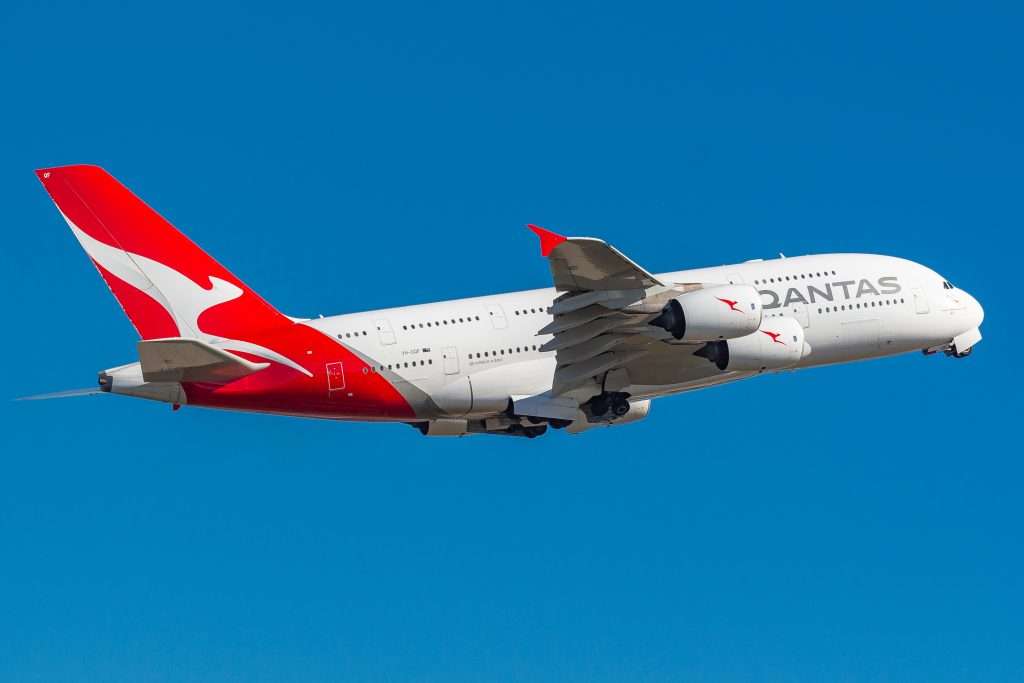
In fact, with the return aligning with more available jets, the A380 was recently deployed to Johannesburg, marking the first commercial A380 flight between Australia and South Africa.
A Global Pandemic Arrives
However, when the global pandemic hit, many were concerned about the future of this type in the Qantas fleet. After all, Australia was hit hard with restrictions, and many couldn’t see a world in which Qantas would want to return such a plane in an age where efficiency was king.
Despite rejecting eight more units, the airline was relatively straightforward throughout the pandemic, saying the aircraft would be crucial to its recovery.
As Australia was decimated, Qantas saw the significant capacity increases necessary for its recovery. Still, other markets returned to pre-pandemic levels quicker, but Qantas knew it could use the A380’s capacity benefits to transport people to their desired locations quickly.
The flag carrier saw it as a win-win. Their patience and support throughout the pandemic were evident, with executives stating they believed the A380 was needed in their fleet and that there would be opportunities when demand recovered, and that is precisely what happened.
Qantas looked to get these planes back serving markets as quickly as possible following the easing of restrictions. While the reactivation process has been publicly revealed as a nightmare, considering these planes were in long-term storage, the result has been rewarding once flying.
What’s Next For The A380 At Qantas?
What’s next for the Airbus A380 at the airline? Well, the planes will fly in the next decade; however, like other airlines that have this in their armoury, plans to phase the plane out are well underway.
In fact, in 2023, Qantas confirmed its retirement plans for the type. From 2032 onwards, the aircraft will be phased out and replaced by the incoming next-gen Airbus A350-1000s that were ordered.

While retirement is on the cards, so is every plane that enters service. That’s the circle of life, but Qantas knows the A380 still has so much to give and will fly worldwide for a considerable period.
The next era of aircraft arrival will allow the airline to maximise efficiency and flexibility. While nothing can replace the A380, the A350 is deemed the ideal candidate for long-term renewal.
To Conclude
Qantas’ A380 story is filled with ups and downs, including a commitment to overhauling how they were perceived, bump capacity, and make Australia more reachable with the flying kangaroo.
Throughout the stay, while the early days saw deliberation over the aircraft order, their commitment was unwavering, highlighted during the pandemic when they stood true as one of the few airlines that believed the A380 had a future with them.
The A380 can be considered a huge success for the Australian flag carrier. For long-haul flying into markets with pent-up demand, it is, yes, the perfect widebody.

ABOUT THE AUTHOR
Daniel Fowkes is a Melbourne-based aviation analyst and journalist with over a decade of industry experience. As founder of Dj’s Aviation, he delivers trusted analysis on aircraft, airline strategy and global aviation trends for djsaviation.net
Leave a Reply
Related Articles




Stay Informed
Get the latest aviation news, analysis and route updates delivered to your inbox.
We respect your privacy. Unsubscribe at any time.
Enjoyed this story?
Make us your go-to for aviation news
Add us as a preferred source on Google and see our latest stories first in Top Stories.
Add Us On Your News Feed
Extremely good on you QANTAS for retaining A 380. You understood, it’s future, very well. Wishing you every success in the future.
Dixon’s head was too big for his ability. The 380 was too big for QANTAS.