
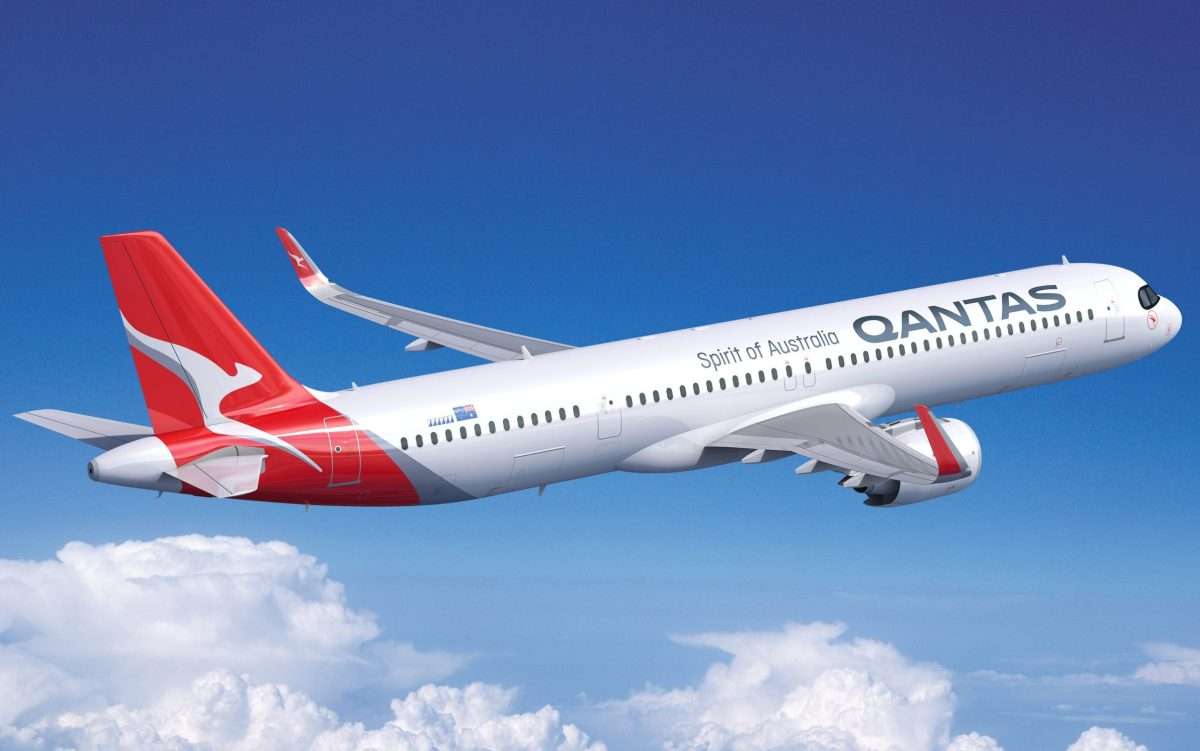
Qantas has published several updates with a significant focus on investing in its customers long into the future.
As part of this investment, the airline has unveiled adjustments to its commitment to the single-aisle A321XLR and delivery delays.
A321XLR Presence To Grow
The Australian flag carrier has revealed that eight additional Airbus A321XLRs are now to be deployed towards Qantas domestic as part of an existing order for the type.
This straightforward allocation change will ensure that the airline can use the next-generation capabilities of the aircraft that will gradually replace the Boeing 737 fleet.
Qantas has long relied on the 737 for domestic and some short-haul international services. However, similar to the Boeing 717 retirement, the Group would ideally like to pivot towards more efficient types among other fleet types.
While being deployed at the low-cost unit Jetstar, the broader Qantas Group has, in the last 18 months, seen the capabilities of just the A321LR.

This long-ranged variant has enabled easing pressures on Jetstar’s existing 787s while also opening up several new route possibilities.
Qantas Battles Delivery Delays
While Qantas has a substantial order book accumulated through several noteworthy orders across recent years, the Group is equally battling delivery delays.
Qantas says its first A321XLR is expected to be delivered three months later to Qantas Domestic with an early-2025 delivery.
As a result, the airline is looking to retain existing aircraft longer while potentially turning to the leasing market to ensure it doesn’t have too significant operational problems.
Manufacturing delays are why Qantas has had its A321XLR delivery pushed back. However, Qantas will not be the only airline to have something like this occur, with other airlines also forecasting delays.
Ultimately, such a delay revealed by Qantas comes only a week after Airbus announced it would push back the entry into service date for its A321XLR to Q3.
Aircraft manufacturers worldwide are battling supply chain difficulties and tight certification practices, which have delayed the EIS for several high-profile and upcoming types, such as the XLR.
A321XLR Improvements
Despite a frustrating delivery delay, Qantas will still see significant benefits over acquiring the next-generation narrowbody over previous-generation planes.
The A321XLR is five metres longer than the 737-800s that are being replaced at the airline, and these jets will be thus configured to seat 200 passengers in a two-class configuration. The makeup will include 20 business class seats and 18 in economy.
Ultimately, this will equate to a 15% increase in the overall capacity; Qantas notes that despite a 15% increase, no space will be lost between seats as the airline ensures customer satisfaction levels remain high.
Additionally, the XLR can fly 3,000km further than the 737-800s, which opens new possibilities for South East Asia and Pacific Island flying while boosting capacity on essential domestic services.

ABOUT THE AUTHOR
Daniel Fowkes is a Melbourne-based aviation analyst and journalist with over a decade of industry experience. As founder of Dj’s Aviation, he delivers trusted analysis on aircraft, airline strategy and global aviation trends for djsaviation.net
Related Articles




Stay Informed
Get the latest aviation news, analysis and route updates delivered to your inbox.
We respect your privacy. Unsubscribe at any time.
Enjoyed this story?
Make us your go-to for aviation news
Add us as a preferred source on Google and see our latest stories first in Top Stories.
Add Us On Your News FeedRelated articles
· Airlines
Allegiant Air Buys Six More 737-8s From Boeing
Daniel Fowkes
26/10/2026
· Airlines
Emirates vs Qatar Airways: The Gulf Superhub Rivalry Compared
Bryan Shelmon
26/10/2026
· Airlines
Riyadh Air Is Moving Away From Riyadh
Daniel Fowkes
26/10/2026
· Airlines
Emirates Isn’t Worried At All
Daniel Fowkes
25/10/2026