

Wizz Air states that aircraft groundings across its Airbus fleet are ongoing, despite its best efforts to resolve the complications.
The airline’s senior executive spoke at the International Society of Transport Aircraft Trading conference, taking place in Prague, and reviewed the evolving situation, solutions, and outlook.
As part of the guidance, Wizz Air expects to see its entire Airus fleet unparked by the end of 2027, based on the current forecast. This is subject to change, but it is something the business is currently operating under.
With this still two years away from a full resolution, the airline also shared that its current outlook is far from positive, as groundings stemming from engine-related concerns are not improving.
Bottlenecks in the Pratt & Whitney operation, the manufacturer of the engines on the affected aircraft, persist. As a result, improvements have yet to be implemented, meaning dozens of the airlines’ valuable aircraft remain parked.
Fleet data indicate that Wizz Air is facing a challenge with 51 aircraft parked across its business; however, of those, 38 are next-generation A320neo family aircraft affected by the Pratt & Whitney engine crisis.
With 167 delivered A321neos, Wizz Air is currently operating only 131 of these, with almost all of the remaining unitsgs being rounded, according to the latest data, with 36 units parked.
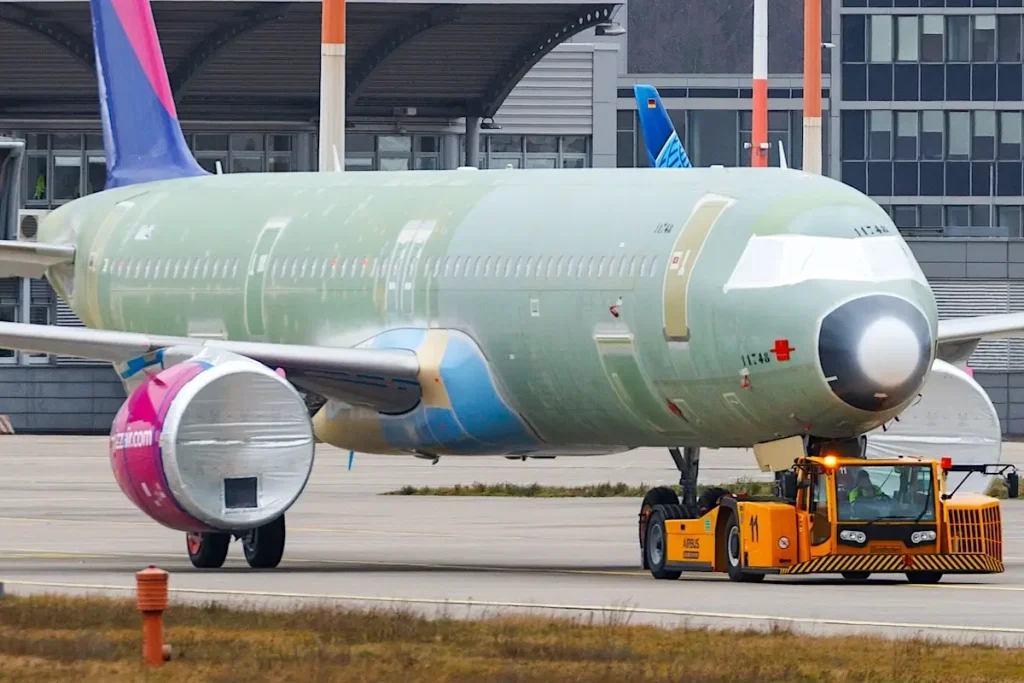
Wizz Air has continued to express frustration at every opportunity regarding the groundings. While communication is ongoing between all parties, improvement remains a goal that has yet to be achieved.
For a budget carrier like Wizz Air, the ramifications of such challenges are significant, as the airline faces intense competition in a highly competitive market. Having aircraft on the ground instead of in use is detrimental to its perfromance and growth into markets where competitors could be leaping ahead.
For Wizz Air as well, battling these Airbus groundings has been all the more frustrating due to the prolonged duration of this issue, with the carrier stating it has now been two and a half years, and there are still two more years expected before the situation can be fully resolved for all parties.
A Global Problem For Airbus
Unfortunately, what Wizz Air is experiencing with its Airbus aircraft is not isolated; this issue continues to be a global problem, affecting the industry broadly.
Currently struggling, Spirit Airlines, which recently entered bankruptcy protection for the second time in as many years, has struggled with its fleet for years, with many next-generation Airbus units on the ground for extended periods.

Meanwhile, Air New Zealand has seen a similar outcome, replacing its A320ceo aircraft with the A320neo family, a straightforward swap that should have brought efficiency and reliability to its operations.
While these planes on paper remain industry leaders, and when operational, serve their intended purpose, reliability has been impossible to achieve for the forZealand flag-carrier, which has been battling persistent groundings, necessitating adjustments.
airBaltic has been another, utilising the A220, which has also been affected. Across recent years, the airline has battled aircraft groundings due to this issue; its 2024/25 winter season is seeing restrictions on capacity.
Airlines such as airBaltic and Air New Zealand have turned to the leasing market in an effort to compensate for the lost capacity resulting from the grounding of next-generation Airbus aircraft.
Even in the United States, as part of a quarterly report published in 2024, JetBlue commented on the struggles it was facing with Airbus aircraft groundings hurting its growth targets and network.
All these airlines, including Wizz Air, among others, have been struggling, not just for a couple of months, but for years; this is frustrating for each airline in different ways.

While the GTF engine problems are complicated to deal with, it’s the lack of a timeframe for a resolution that’s the more challenging aspect for these airlines, which are then unable to plan reactivation efforts.

ABOUT THE AUTHOR
Daniel Fowkes is a Melbourne-based aviation analyst and journalist with over a decade of industry experience. As founder of Dj’s Aviation, he delivers trusted analysis on aircraft, airline strategy and global aviation trends for djsaviation.net
Leave a Reply
Related Articles




Stay Informed
Get the latest aviation news, analysis and route updates delivered to your inbox.
We respect your privacy. Unsubscribe at any time.
Enjoyed this story?
Make us your go-to for aviation news
Add us as a preferred source on Google and see our latest stories first in Top Stories.
Add Us On Your News Feed
Should have bought Boeing 737 aircraft
It appears that in spite of the innovations of engine advancement,the reliability is worse, so what’s achieved a poor service, between Boeing & airbus, I am not surprised the Chinese want to create 500 km electric trains & train stations, instead of foreign poor reliability poor cash return planes,