
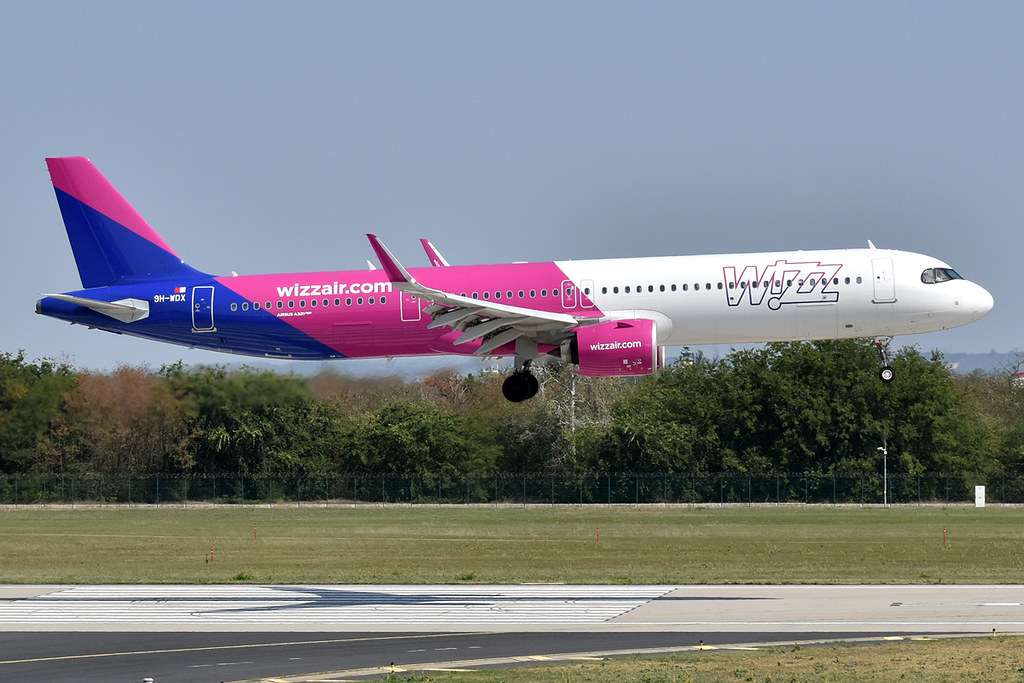
Wizz Air recently confirmed that it would be forced to keep aircraft grounded throughout 2025; however, that is expected to continue until almost 2030.
The carrier has stated that it doesn’t expect pressures to ease until at least four of five years, bringing it closer to 2029/2030 before the engine crisis is sorted.
At least for Wizz Air, the engine crisis surrounds Pratt & Whitney’s Geared Turbo Fan engine or GTFs and affects its A320 family, a core part of the airline’s fleet makeup.
Speaking at the Airline Economic Conference, the airline’s Chief Executive Officer, Jozsef Varad, said that engine problems will persist considerably longer.
Due to the aforementioned engine issues, Wizz Air has confirmed that 40 planes will remain grounded until 2026. However, this will likely continue for a longer duration than most expected.
Several factors can cause groundings, such as the inability to fix engines with the required parts due to supply shortages and maintenance delays.
Wizz Air isn’t the only airline facing a similar situation in Europe. AirBaltic has been broadly documented as a highly affected carrier operating a fleet of only Airbus A220s.

The problems stretch further than Europe and into the United States, for no airline has necessarily been spared, but the severity of the issue at hand varies from case to case.
In some instances, airlines have been able to draft aircraft to cover the grounded units on a short-term wet lease. However, making these transactions a reality has been challenging, given the uncertainties about when groundings will ease.
Wizz Air doesn’t doubt that things are slowly improving, and sustained efforts are also being made to stabilise supply chains.
Unfortunately, the harsh reality is that these things are not being done quickly enough to make genuine improvements. Wizz Air initially believed things would ease in 18 months to two years, but that forecasting has been wildly discarded.
Current forecasting shows this issue will persist for four to five years. Furthermore, when plane manufacturers’ delays in delivering new aircraft are added, there will be more challenges in adequately meeting capacity.
These problems have become the new normal for the aviation industry, and airlines must find ways to juggle the difficulties to limit the financial and operational impacts.
Under worst-case scenarios and long-term effects such as what Wizz Air is set to experience for almost another half-decade, compensation agreements can be signed in a bid for the airline to try and cope with the losses it’ll feel.

ABOUT THE AUTHOR
Daniel Fowkes is a Melbourne-based aviation analyst and journalist with over a decade of industry experience. As founder of Dj’s Aviation, he delivers trusted analysis on aircraft, airline strategy and global aviation trends for djsaviation.net
Related Articles




Stay Informed
Get the latest aviation news, analysis and route updates delivered to your inbox.
We respect your privacy. Unsubscribe at any time.
Enjoyed this story?
Make us your go-to for aviation news
Add us as a preferred source on Google and see our latest stories first in Top Stories.
Add Us On Your News Feed