

Thai Airways retired its Airbus A380 fleet in the early 2020s after an ambitious endeavour to operate the world’s largest passenger plane across its network.
The move, which made headlines then, however, hardly came as a shock. This was a carrier with the odds stacked against it: internal problems and an operating climate that didn’t favour such an aircraft.
However, after boldly committing to the aircraft in the early 2000s, why did the airline abandon the quad-engined superjumbo?
Thai Airways Orders The A380
Thai Airways placed its order for six Airbus A380s in the mid-2000s. The commitment at the time saw the airline join a roster of other major international airlines that viewed the widebody as a new era for global air travel.
Aiming to address pent-up demand and slot-constrained airport challenges, the A380 was an Airbus’ offering to compete with the 747. It fended off emerging twin-engine jet competition and provided an unparalleled onboard experience.
For Thai Airways, the A380 seemed ideal as it looked to leverage its home of Bangkok to become a true powerhouse in the Asian and broader global industry to serve long-haul markets such as London and beyond.
The carrier also believed the A380’s size and range would support its hub-and-spoke model at Bangkok Suvarnabhumi Airport, allowing it to consolidate traffic, arguably a core selling point that Airbus was pitching to customers.
However, Thai Airways only acquired a minimal number of units. Its fleet size is relatively small compared to other airlines, and despite the small number of operational challenges, there were more than present.
The Many Challenges Flying The A380
While the A380 delivered on its promise of unparalleled capacity, Thai Airways quickly became one of the many airlines that experienced network challenges upon receiving the plane.
Coming with the hefty price tag was the subsequent burden many airlines felt when filling the world’s largest passenger plane on a continued basis to turn a profit operating the type.

This wasn’t a problem for airlines such as Emirates and British Airways; however, other international carriers, while significant in their own right, didn’t have the same market demand or backing.
Moreover, many of these airlines experienced peak travel seasons and filling the planes during off-peak seasons became a challenge. Additionally, the A380’s size limited the number of airports capable of handling it, restricting Thai Airways’ flexibility.
Operational costs were another significant challenge for Thai Airways that also plagued the broader adoption of this aircraft. The four-engine configuration would always make the plane less fuel-efficient for specific customers.
As next-generation aircraft became more prevalent, Thai Airways began seeing the A380 as an even less attractive option for its day-to-day network. The disadvantages far outweighed the advantages.
How COVID-19 Killed The A380
However, the COVID-19 pandemic devastated the global aviation industry and took no prisoners. Thai Airways was no exception.
As borders closed, international travel demand plummeted. The downturn was particularly brutal for airlines dependent on long-haul routes, and Thai Airways’ typically robust operations were thrown into disarray.
Furthermore, all this occurred during a relatively challenging period for the airline, with its financial position facing strain. The A380, already a high-cost aircraft, became a liability in a market that couldn’t justify a plane of its stature.
Thai Airways needed to get radical as its financial position worsened. The focus was to stay afloat as a business and preserve assets. For an aircraft that wasn’t deemed favourable, the Airbus A380 was one of the planes axed as part of downsizing following a restructuring process that was entered.
By 2020, Thai Airways had grounded its entire A380 fleet. At the time, reporting highlighted how the global pandemic only accelerated the Bangkok-based carrier’s decision to axe the plane. Still, it was something in the pipeline as the fleet assessments began.
Thai Airways To Sell The Fleet
In 2021, Thai Airways confirmed it would go on to sell its six A380s as part of its restructuring efforts and to generate revenue for an asset that was no longer fit to fly across its network.

The move reflected immediate financial pressures as greater focus was placed on streamlining for the future and ensuring the company’s survival into future decades.
Selling the A380 fleet was no simple task. Given the type’s operational constraints and the ongoing preference for newer aircraft, the market for second-hand A380s was limited.
Nonetheless, Thai Airways pressed forward, believing that for airlines that still had a place for the A380, the aircraft could be stripped for valuable parts to generate cash. The complexity of flying planes out of the country was also highlighted as a roadblock.
Rumours Of A Return To Service
Interestingly, in 2022, reports emerged that Thai Airways was considering reactivating its A380s as international demand rebounded. According to FlightGlobal, the airline was evaluating the potential benefits of bringing the superjumbo back into service, especially for high-demand routes.
However, this idea was ultimately shelved, to not the surprise of many. Industry analysts speculated that the costs of reactivating and maintaining the A380 fleet outweighed the potential benefits.
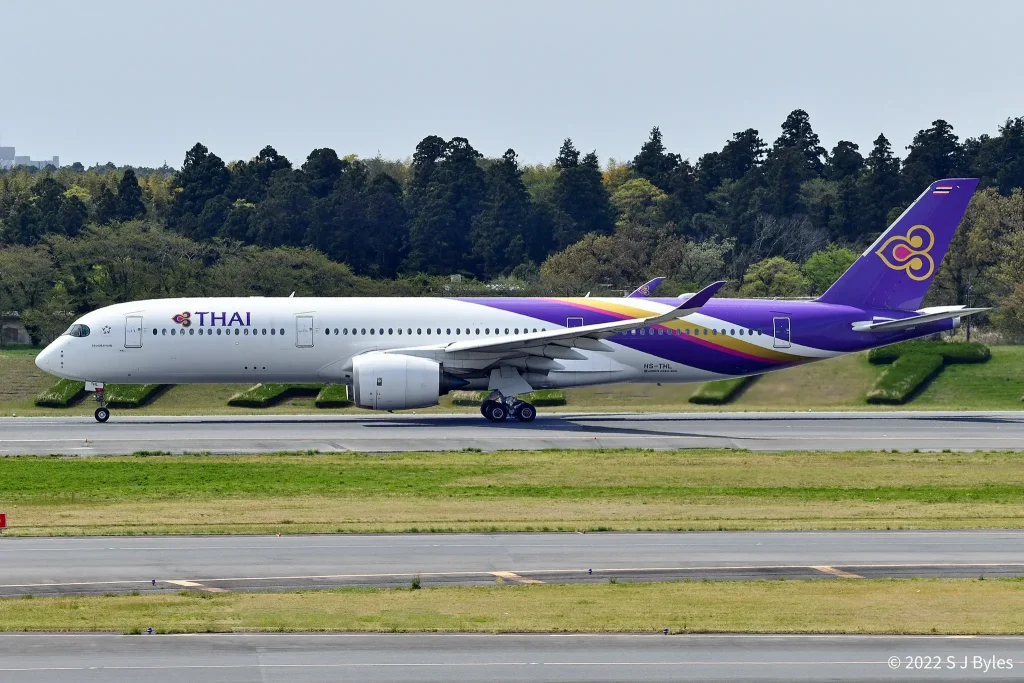
Instead, Thai Airways focused on its more versatile widebody aircraft, such as the Airbus A350 and Boeing 787, which remain better suited to its turbulent network and financial position.
A Mismatch
By 2023, Thai Airways officially retired and began the sale process for its A380 fleet, ending its relationship with the aircraft.
While the A380 offered high capacity and the promise of comfort through a spacious cabin, it always had operational limitations that meant it didn’t work out for some companies.
Thai Airways never seemed all that fond of the A380; however, factors such as the emergence of a global pandemic only accelerated the proceedings.
Therefore, the A380 with Thai Airways forever remains a mismatch and rather a what could’ve been scenario rather than one that was realised.

ABOUT THE AUTHOR
Daniel Fowkes is a Melbourne-based aviation analyst and journalist with over a decade of industry experience. As founder of Dj’s Aviation, he delivers trusted analysis on aircraft, airline strategy and global aviation trends for djsaviation.net
Leave a Reply
Related Articles




Stay Informed
Get the latest aviation news, analysis and route updates delivered to your inbox.
We respect your privacy. Unsubscribe at any time.
Enjoyed this story?
Make us your go-to for aviation news
Add us as a preferred source on Google and see our latest stories first in Top Stories.
Add Us On Your News Feed
It is really hard for TG to own 380
Without generating any revenue
They cud have given to BA or EK
On dry lease