

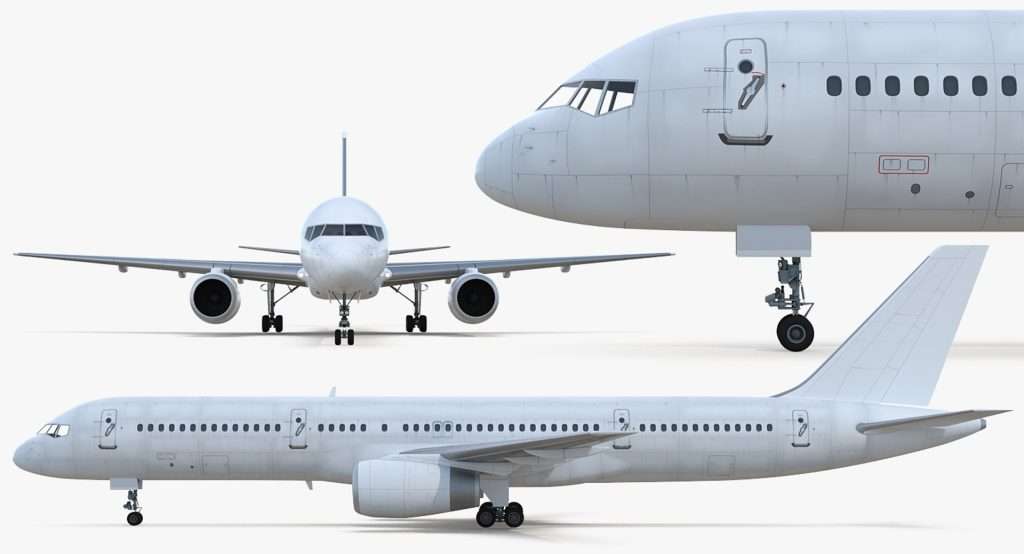
The Boeing 757-100 was a proposed variant of the popular single-aisle program announced at the series’ launch.
This variant was conceived to address specific market gaps and offer airlines greater flexibility as the decades passed.
However, the 757-100 was never developed, and Boeing’s decision to abandon the project also came relatively quickly.
Why was an aircraft with enough backing to be launched formally was never actually flown? Was it a missed opportunity? And what did the variant entail?
Introducing The Boeing 757-100
When Boeing introduced the 757 in the early 1980s, the aircraft was applauded as one that continued to take necessary steps to allow airlines to operate efficiently, with range and flexibility.
The 757-200 and later the 757-300 became staples for airlines operating medium-haul and transcontinental routes. To this day, they are still utilised across key markets, showcasing the series’ longevity.
However, Boeing identified a potential market for a smaller, lower-capacity aircraft, which led to internal discussions of a prospective shorter unit known as the 757-100.
The proposed -100 was envisioned as a scaled-down version of the -200, which was also announced at the time. It would offer reduced passenger capacity but retain the performance advantages that would hopefully lead airlines to purchase the aircraft.
Boeing envisaged the aircraft being able to seat around 120 to 150 passengers in a typical configuration. Furthermore, the jet would be designed precisely to cater to routes with more moderate demand, where any larger plane would be deemed unsuitable.
As such, the American planemaker saw the 757-100 as a perfect disruptor and a means to improve the 757 program’s performance with more uses than one.
Furthermore, Boeing had outlined its plans to replace the 727, an ageing unit, with a plane with massive overall improvements.
The 757-100 was even announced at the broader launch of the 757 program in 1978. However, there were immediate concerns.
Problems Arise In Development
Despite the 757-100 appeal, several challenges impacted the planemaker’s ability to offer the aircraft to customers firmly.
Another factor was the 757-100’s struggles with the shortened fuselage and, ultimately, scale compared to the other variant in the 757-200 that was also being launched.
Designing and producing a shortened variant of an aircraft is not straightforward, and while not a clean sheet, it does have its associated difficulties. Structural modifications, weight reductions, and system adjustments would have been required.
All these relevant changes would also require the planemaker to make substantial investments. Given the relatively small market for such an aircraft, these costs were difficult to justify, especially with the 737 program already meeting much of the demand.
That latter aircraft was another critical consideration for the prospective market overlap. At the time, Boeing was also producing the 737 family, which offered aircraft in similar size and capacity ranges.
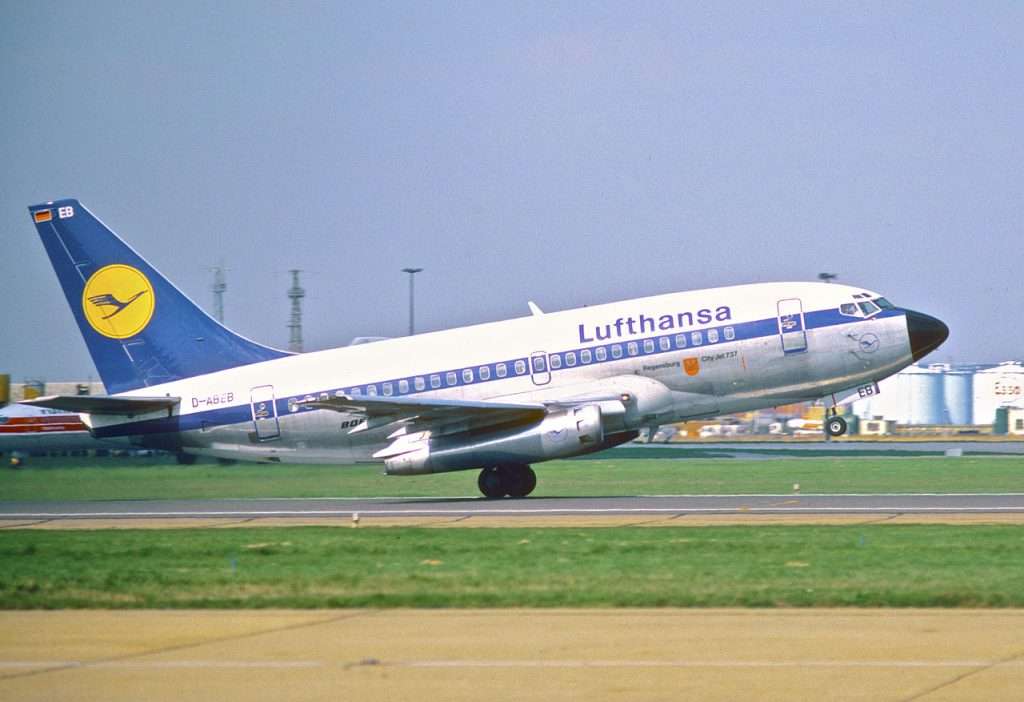
If Boeing had introduced the 757-100, it would risk cannibalizing 737 sales and creating unnecessary internal competition that could negatively impact the broader business.
Why Did Boeing Want A 757-100?
However, it remains important to consider why Boeing considered a 757-100 in the first place, even if it would continue not to be launched and ultimately have many negatives.
By the late 1970s, the industry was transitioning to more fuel-efficient and advanced designs thanks to the rapid development of key technologies to facilitate these advancements.
Each new plane would aim to fundamentally address airlines’ concerns about rising fuel costs and emerging companies in markets with greater competition.
Airlines sought aircraft that could offer operational flexibility while reducing costs on thinner routes. The 757-100 was intended to fill this niche, as per Boeing, offering an option for carriers operating shorter routes without sacrificing the broader 757 program.
Such enhancements are seen across the industry but have typically been seen in the opposite direction. Instead of a shorter variant, the fuselage should be extended to allow for increased passengers and even, at times, range.
Why The 757-100 Never Launched?
Ultimately, Boeing chose not to pursue the 757-100; the planemaker discontinued the variant in 1979, ending any hope of it coming to market.
Instead, Boeing wanted to focus on expanding its existing program and finding ways to ensure the 757 would become a mainstay within the industry.
The 757-200 became the program’s lifeline, becoming popular with airlines and securing strong sales in the upcoming decades.
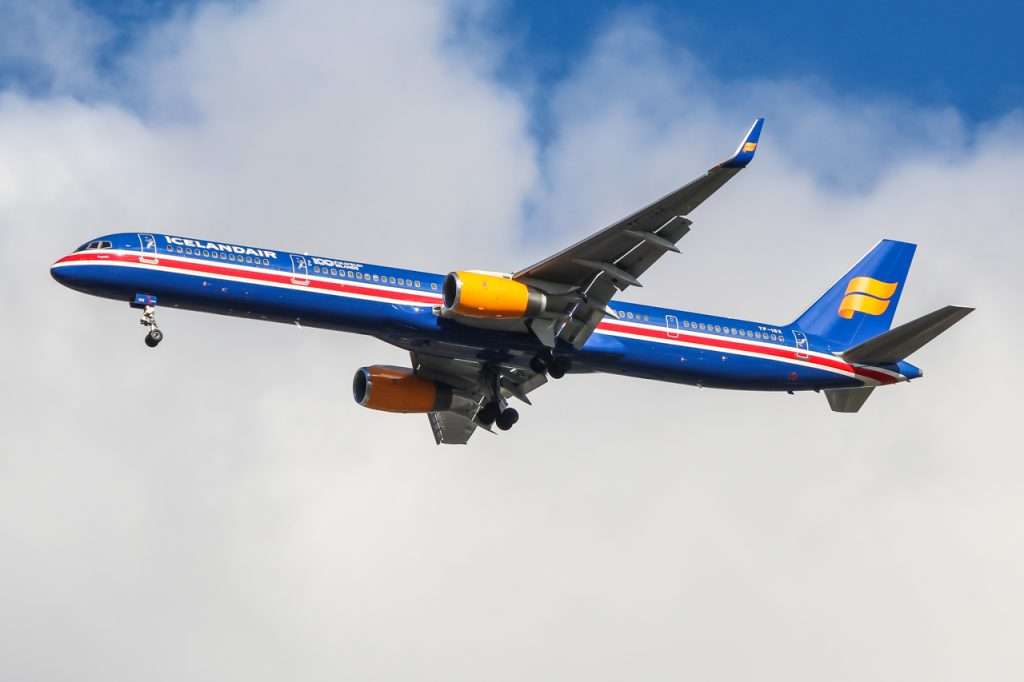
Eventually, Boeing would look to offer an upgrade in the form of a stretch rather than a shortened variant, and this was known as the 757-300. Such a move followed the 757s production peaking at around 100 aircraft by the early 1990s.
Was The 757-100 A Missed Opportunity?
Boeing’s decision not to develop the 757-100 can be viewed through two different lenses, with two very different outcomes.
By not proceeding with this aircraft, Boeing was able to optimise the broader 757 series to enjoy the success it would go on to have while also ensuring there was a gap between it and the popular narrowbody 737 series, which was taking off at this point.
However, the other lens may see some argue that the 757-100s absence from the portfolio of commercial aircraft offered by Boeing left a gap in their offerings—a gap that Boeing was attempting to target initially.
That lens would have analysts return and discuss fundamental areas such as the overall presence across the commercial aeroplanes division and how a 757-100 may have negated the 737, Boeing’s most important series.
Boeing’s end decision does, with hindsight, seem to have been the right one. The 757 would be an iconic plane known affectionately as the flying pencil. A testament to the jet is that some airlines feel there is no perfect replacement for such a plane.
Moreover, the 737 series, the type that the 757-100 was feared to have the potential to impact, went on to thrive and remains today, through newer versions, a staple industry-wide for single-aisle flying.
To Conclude
The Boeing 757-100 remains a “what-if” part of the broader program announced decades ago.
Ultimately, the premise had enough internal backing to prove its potential, so it wasn’t launched and remained just a concept.
However, Boeing soon realised the complexities of proceeding with such a plane and determined it would not be wise to proceed.
The 757-100s’ stay in the industry was short, barely lasting a year from its announcement until plans were eventually scrapped for such a variant.

ABOUT THE AUTHOR
Daniel Fowkes is a Melbourne-based aviation analyst and journalist with over a decade of industry experience. As founder of Dj’s Aviation, he delivers trusted analysis on aircraft, airline strategy and global aviation trends for djsaviation.net
Leave a Reply
Related Articles




Stay Informed
Get the latest aviation news, analysis and route updates delivered to your inbox.
We respect your privacy. Unsubscribe at any time.
Enjoyed this story?
Make us your go-to for aviation news
Add us as a preferred source on Google and see our latest stories first in Top Stories.
Add Us On Your News Feed
So,
The 757 is still missed today. Funny how during the pandemic the one aircraft that we actually put back into service and ran the most… We went back to the 757. Bought a couple on the secondary market sold a couple to FedEx , But I’m telling you these fit the perfect niche Just the right number of seeds the PW2000 was a reliable engine It really was the perfect size and plate for what we needed. Rumor is if the next Boeing aircraft comes to fruition… The 797… It will be a player similar to the 757.