
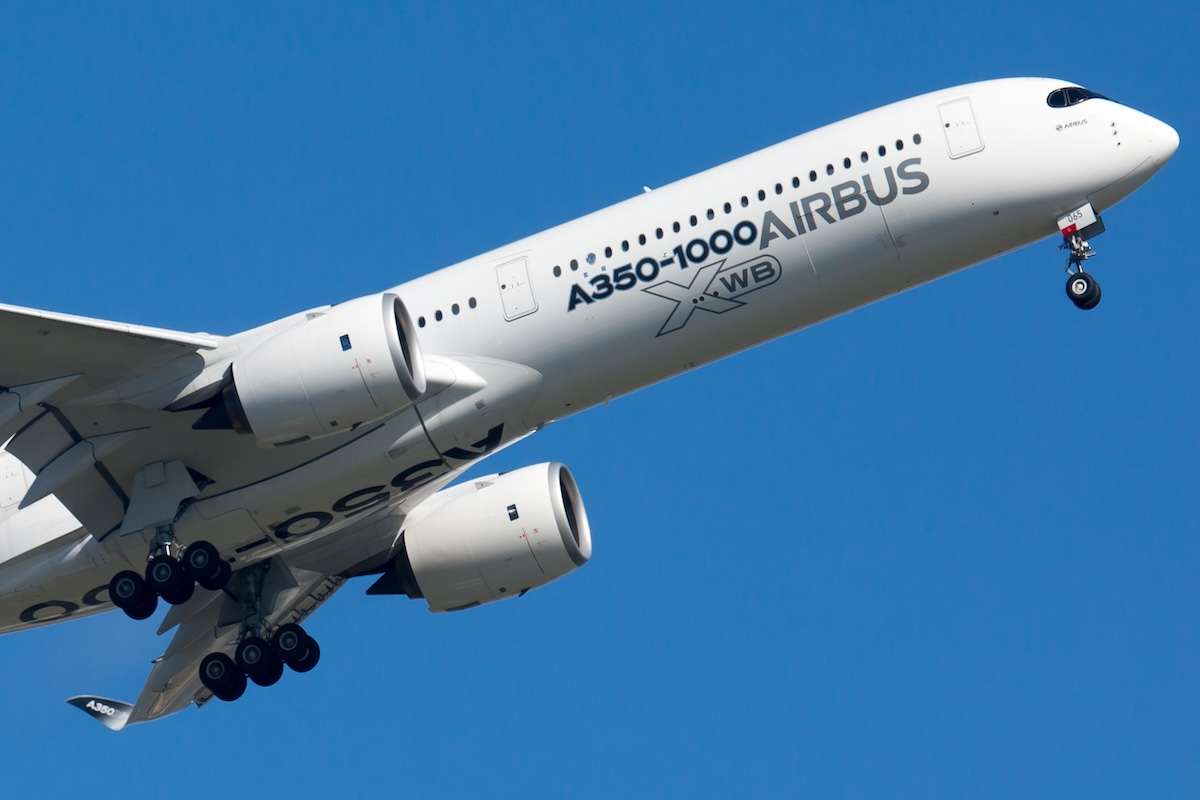
Philippine Airlines’ order for the Boeing 787 and Airbus A350, flagged this week, has become clearer, with specific variants and units now reported.
Sources suggest that Philippine Airlines’ newest widebody commitment will focus more heavily on high-capacity models than on mid-sized jets, with the A350-1000 and 787-10 selected.
Representing the first order with Boeing for the Philippine flag-carrier, it also locks in its decision to operate a dual widebody strategy, reshaping its long-haul operations with an emphasis not on replacement but on growth.
While the finalisation is still pending, the expectation remains that this new order for Airbus and Boeing jets will be formally announced at this month’s Farnborough Airshow in the United Kingdom.
A New 787 & A350 Order Details
According to those familiar with the matter, the previous estimate of a widebody contract for 20 jets in total has risen, with Philippine Airlines committing to 24 across the two leading manufacturers.
Firstly, the airline is returning for more Airbus A350-1000s, with this accounting for the smaller portion of the contract but also representing a top-up purchase for a jet delivered in December 2025 and tasked with replacing the 777-300ER.
Nine A350-1000s will be ordered from Airbus to strengthen high-capacity operations on dense international routes. This amid positive demand and a desire to build a future fleet capable of serving the business without restriction.
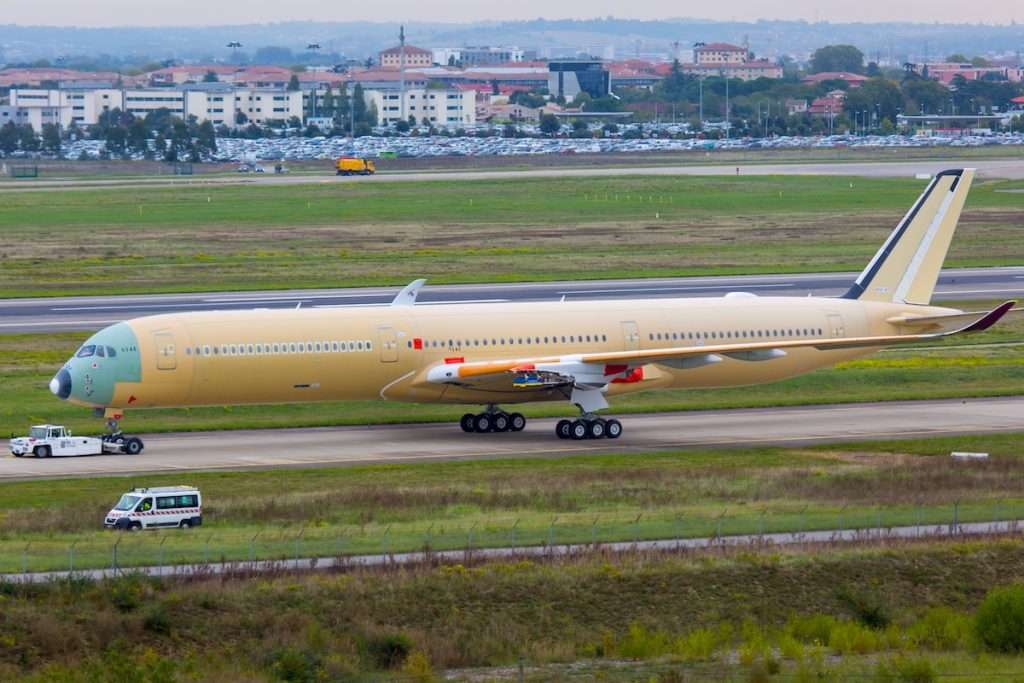
The headline part of the new purchase will be the order at Boeing, the first since 2007, and will ensure a new family of aircraft is inducted into the fleet, with the 787 Dreamliner to be ordered. Now, further details have been revealed on the variant, with the 787-10 selected and 15 to be delivered.
This 787-10 commitment is the bigger of the two, not just from a unit standpoint, but given the more recent history between the two. Boeing has not received an order for the airline since the 777-300ER, and while having had a presence in the fleet mix up until this point, Airbus was leaned on more heavily for the future.
A Headline Boeing 787-10 Purchase
With the Boeing 787-10 being the largest member of the Dreamliner family, it can accommodate more passengers than the other two variants and suits high-density flying on medium- to long-haul routes.
The jet competes directly with the A330neo family, but with a more modern and composite fuselage that allows it to slot into the commonality of the 787 family. That flexibility has been a driving factor away from the performance metrics that have made it a success.
For Philippine Airlines, the 787-10 fills a gap below the A350-1000 and complements the existing reliance on the A350-900 present in the fleet. The flag-carrier needs a high-efficiency twin-jet that still has sufficient capacity to serve more trans-Asia and even Australian services, where the metrics of the -1000 do not make sense.

The 787-10s base does allow the airline to offer premium capacity to some of its most important markets while still producing lower fuel burn per seat than its older, previous-generation jets, such as the 777-300ER or the A330-300, which are on the way out.
While introducing a new platform to the business might be perceived as complicating matters, the A330ceo and 777-300ER are on the way out. Eventually, it’ll be the A350 and 787 families that take the business further forward. That means once replacement and growth are executed, the same dual-twin strategy will continue, with Airbus and Boeing both having a presence.

ABOUT THE AUTHOR
Daniel Fowkes is a Melbourne-based aviation analyst and journalist with over a decade of industry experience. As founder of Dj’s Aviation, he delivers trusted analysis on aircraft, airline strategy and global aviation trends for djsaviation.net
Related Articles




Stay Informed
Get the latest aviation news, analysis and route updates delivered to your inbox.
We respect your privacy. Unsubscribe at any time.
Enjoyed this story?
Make us your go-to for aviation news
Add us as a preferred source on Google and see our latest stories first in Top Stories.
Add Us On Your News FeedRelated articles
· Airlines
Allegiant Air Buys Six More 737-8s From Boeing
Daniel Fowkes
26/10/2026
· Airlines
Emirates vs Qatar Airways: The Gulf Superhub Rivalry Compared
Bryan Shelmon
26/10/2026
· Airlines
Riyadh Air Is Moving Away From Riyadh
Daniel Fowkes
26/10/2026
· Airlines
Emirates Isn’t Worried At All
Daniel Fowkes
25/10/2026