
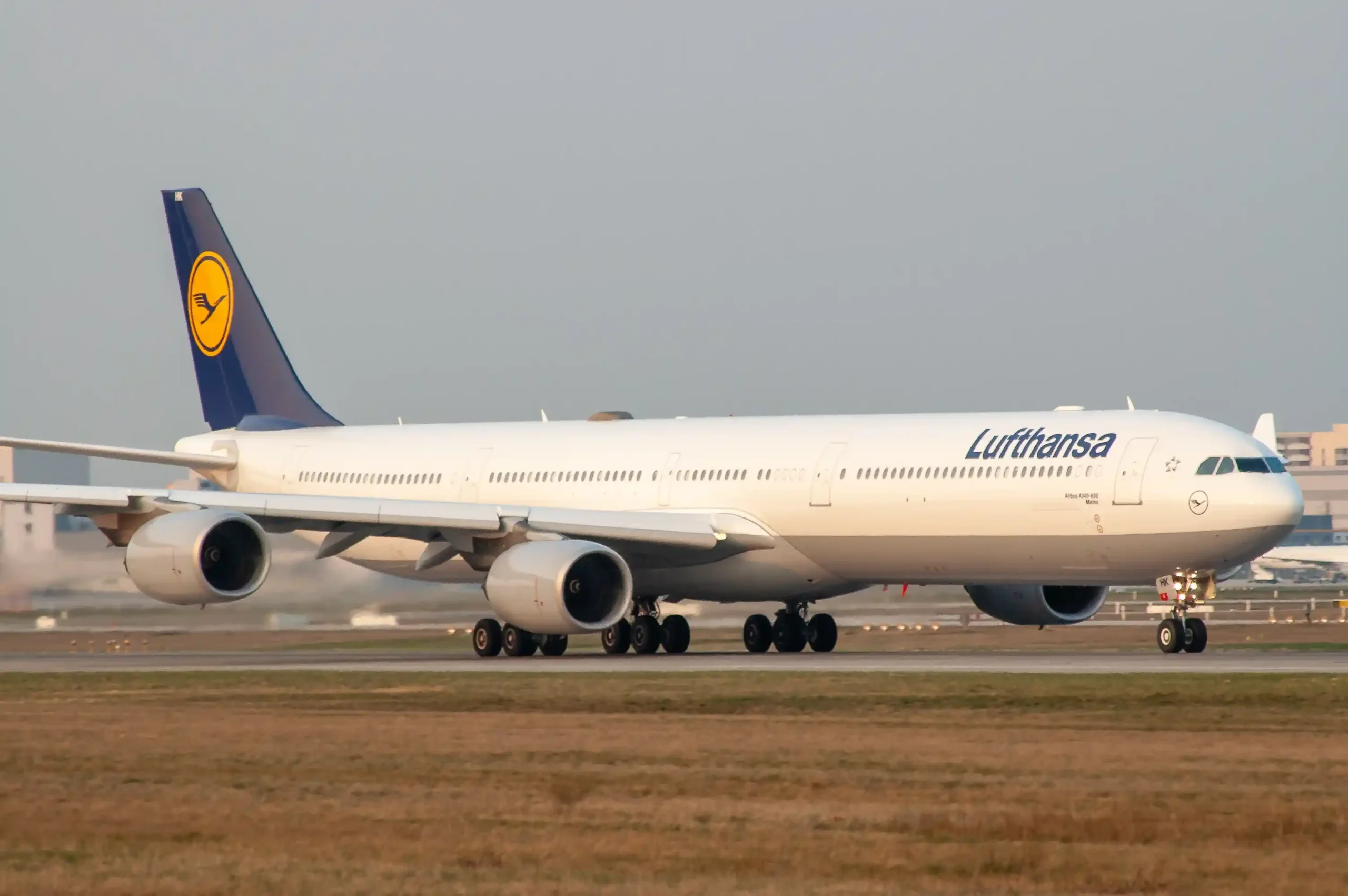
Lufthansa will say farewell next week to its Airbus A340-600 but will retain its older Airbus A340s, retiring its newer variant.
The decision strays from typical airline fleet-renewal decisions, which aim to retire older models in favour of younger jets with better operating economics, but Lufthansa’s decision-making has been different.
A340-600 passenger operations will conclude on 18 October 2026, with the airline operating the final flight of the high-capacity, quad-engined Airbus widebody. However, the A340-300 will remain to cover for the uncertainty surrounding Boeing 777-9 deliveries/
The decision is part of the airline’s bid to reduce its fuel exposure on long-haul operations while keeping the support needed to mitigate unknowns in the delivery of next-generation jets. The A340-600’s departure comes after more than two decades of service, with the first of 24 being delivered in November 2003.
A340-300 is being kept, an older aircraft over the A340-600
Lufthansa’s departure from the A340-600 has been in the making for a long time, but the axing will not end A340 operations completely. The airline will keep its smaller A340-300 active a little longer and into the crucial Northern Summer 2027 planning.
The German flag-carrier’s decision is simple: it’s not about demand or the A340-300’s operating economics, but about the uncertainty around the debut of its upcoming flagship, the Boeing 777-9, which is over six years delayed.
Lufthansa Group chief executive Carsten Spohr told journalists at the end of September that the 777-9 would not appear on the summer 2027 schedule as of now, with Boeing indicating that it could deliver the first aircraft in the first quarter of 2027.
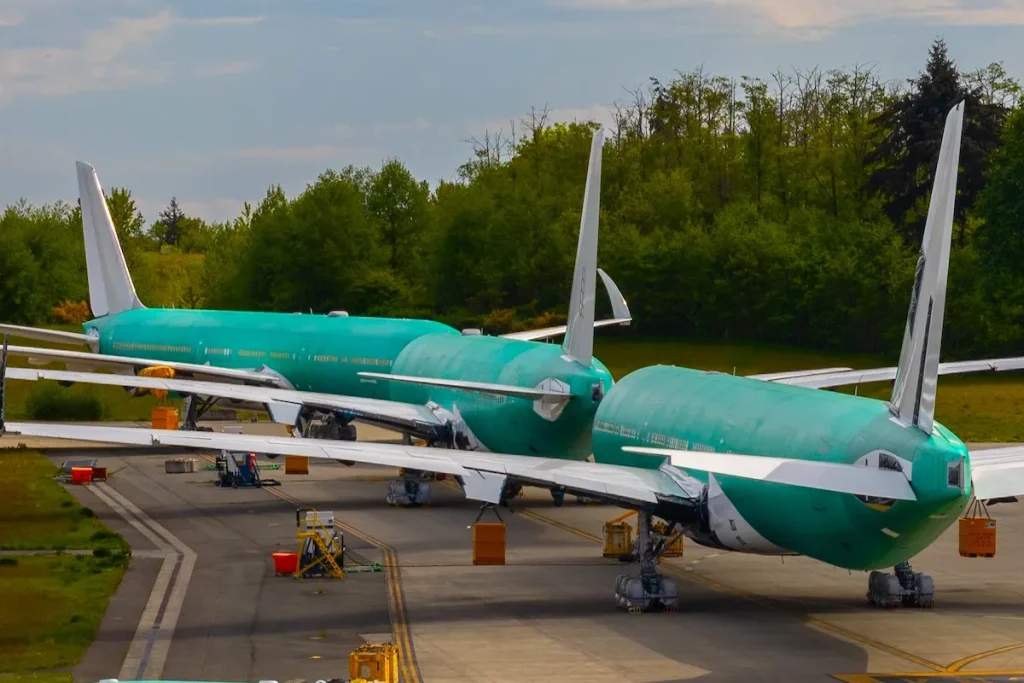
Lufthansa, though, like Emirates as part of the group of customers launching the type, remains uncertain about whether a debut will arrive in time for the peak summer season and, additionally, how many 777-9s will be delivered in quick succession to support a launch.
By keeping the A340-300 active, Lufthansa retains a contingency plan it has held across its fleet to offset new-aircraft delays throughout the 2020s. However, the A340-300s would not remain operational into 2027 unless Lufthansa could provide stronger assurances about the debut of its next flagship from American planemaker Boeing.
The A340-300 fleet is much older, at about 26.5 years, compared with the A340-600’s 17 years, putting the younger fleet on the chopping block and the older one retained. Sphor has acknowledged that the A340-300 isn’t less of a burden; maintenance and costs squeeze margins, but the value is in the type’s current availability.
Lufthansa compares the A340-600 to the A340-300
Lufthansa’s decision to remove the A340-600 requires an inside look and a configuration comparison with the stretched model, which carries 281 passengers in a four-class layout comprising First, Business, Premium Economy, and Economy. However, the A340-300 has room for 279 in a less dense layout; the total seat count is very close.
The nearly identical capacity points, despite different layouts and commercial roles, make it easier to cover the 777-9. The A340-300s carry more Economy seats, with 221 versus 189 on the outgoing A340-600.
Additionally, the A340-600 is longer, with a maximum takeoff weight of 368 tonnes; its fuel capacity rises with the Rolls-Royce Trent 500 engines, compared with the CFM56s fitted to the A340-300. While performance analysis includes metrics beyond maximum takeoff weight, the A340-600’s younger age doesn’t make it more economical.
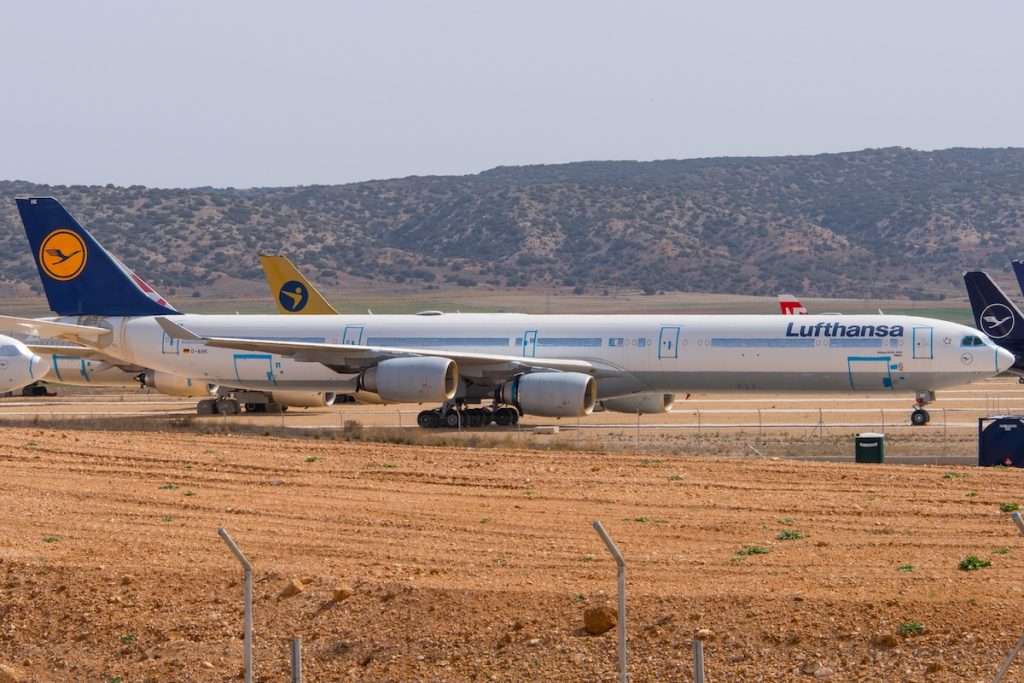
Lufthansa is ultimately removing the A340-600 to align with capacity and cost-cutting measures, alongside grounding two Boeing 747-400s this winter and closing the Lufthansa CityLine division. Lufthansa has been in a poor financial position for some time, and these long-planned cuts are necessary to restore stability.
Next week, Lufthansa will no longer operate the Airbus A340-600, and the A340-300, while retained for the moment, will exit in the next year as the 777-9 gradually debuts; these jets have ultimately continued flying well beyond initial expectations, thanks to supply chain and delivery delays.
Lufthansa previously expected to axe models like the A380, A340 and 747 during the height of the COVID-19 pandemic to make way for a more streamlined, efficient fleet. Unfortunately for Lufthansa, but fortunately for the industry, demand returned sooner than expected, and pressure to match capacity increased. With new aircraft not being delivered on time the German flag-carrier looked to its capcity workhorses for the short-term to act as a solution, and that they have done.

ABOUT THE AUTHOR
Daniel Fowkes is a Melbourne-based aviation analyst and journalist with over a decade of industry experience. As founder of Dj’s Aviation, he delivers trusted analysis on aircraft, airline strategy and global aviation trends for djsaviation.net
Leave a Reply
Related Articles




Stay Informed
Get the latest aviation news, analysis and route updates delivered to your inbox.
We respect your privacy. Unsubscribe at any time.
Enjoyed this story?
Make us your go-to for aviation news
Add us as a preferred source on Google and see our latest stories first in Top Stories.
Add Us On Your News FeedRelated articles
· Airlines
Allegiant Air Buys Six More 737-8s From Boeing
Daniel Fowkes
26/10/2026
· Airlines
Emirates vs Qatar Airways: The Gulf Superhub Rivalry Compared
Bryan Shelmon
26/10/2026
· Airlines
Riyadh Air Is Moving Away From Riyadh
Daniel Fowkes
26/10/2026
· Airlines
Emirates Isn’t Worried At All
Daniel Fowkes
25/10/2026
Ich fotografiere sehr gerne Flugzeuge besonders gerne die mit 4 Triebwerken