

The Lufthansa Group has announced a new order for 20 long-haul aircraft, split evenly between Airbus and Boeing, with the A350 and 787 purchased, respectively.
The latest deal forms another pillar of ongoing modernization efforts, with a list price of USD $7.7 billion. This is, however, not the full price paid with hefty discounts handed down from the planemakers to airlines/groups when purchasing jets, but not publicly disclosed.
Lufthansa Group’s shift towards twin-engine widebody jets has been important to streamlining processes and lowering overall costs. The imminent retirement of quad-engined jets such as the 747-400 and A340-600 at the primary German flag carrier is evidence of the direction the industry is heading.
These new aircraft are, as per CEO Carsten Sphor, going to be key to sustainability targets, with deliveries to commence across 2032-2034, with a view to benefiting not just Lufthansa but fundamentally SWISS, Austrian Airlines, and so on. The exact specifics on the units going to each airline remain to be seen.
Given that these orders comprise the Lufthansa Group and deliveries commence in the 2030s, this gives the business ample time to determine the best split of the 10 Airbus A350s and 10 Boeing 787s for deployment. Additionally, with the inclusion of ITA Airways, which last month said it needed more Airbus A350s to fuel its own growth, this becomes another avenue for consideration.
The Airbus A350 Is Key For Lufthansa Group
Selecting ten more Airbus A350s will be important, as this not only raises the firm orders for the Airbus flagship widebody but also fundamentally ensures that deliveries will continue deep into the 2030s. As a result, not only can ongoing fleet replacements occur, but growth can also take place in a sustainable and efficient manner.
With the upcoming delivery of aircraft like the A350-1000, the highest-capacity model currently in production by Airbus, destined for Lufthansa. This is further complemented by nearly 100 combined orders for this family, in which the active A350 units are significantly outnumbered by jets still to be delivered over time.
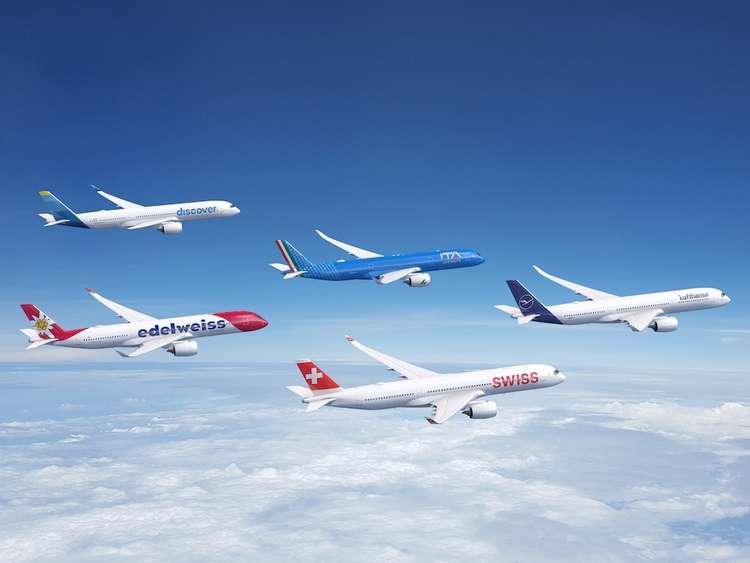
In late 2024, the business said that it expected 47 deliveries for the A350 series between then and 2031, and now, with deliveries secured beyond that, more A350s only strengthen commonality within the Group and whether it’s the -1000 or -900, capacity and range can be blended together to benefit different angles of the network.
When considering investments in cabins, such as Lufthansa’s Allegris, which has begun rolling out across newly delivered 787s, these investments will naturally be featured on all new builds. As a consequence, this should be another pillar in helping the damaged German flag-carrier rebuild its brand image after years of poor decisions.
The More Boeing 787s, The Better
For Lufthansa Group, it’s not just the Airbus A350, but the Boeing 787-9, which is also expected to be vitally important to the future of airlines’ fleets, a type that’s already present across many airlines, but moving forward will see its role increase.
These aircraft will feature all the latest technologies and are powered by a more climate-friendly approach. This means the decision is based on customer needs, as much as it’s an attempt to make an investment that’s sustainable for the future and adheres to the premium quality the business aims to achieve.
More Boeing 787s also help standardise operations, with the number of aircraft available in distinct types decreasing; this is seen as key to lowering overall costs in the business, a priority that has long plagued many airlines’ bottom lines.
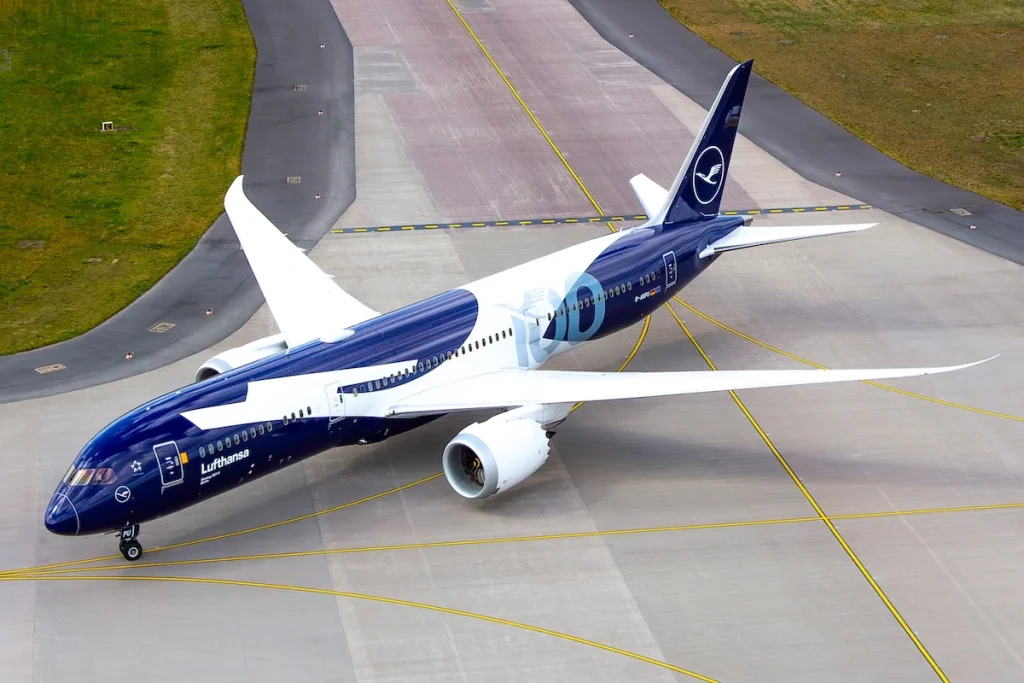
Additionally, newer planes like the Boeing 787s will reduce long-term maintenance and operating costs, with simplified cockpit and cabin crew operations. Furthermore, there’s the licensing, the ability to swap out aircraft on routes, and benefits to the spare parts inventory, which enable a more cohesive plan across the Group.
Now, Lufthansa Group has 232 aircraft on order, 107 of which are next-generation long-haul jets, and that list continues to grow over the long term as demand forecasts indicate the need for more sustainable alternatives to support renewal and growth.

ABOUT THE AUTHOR
Daniel Fowkes is a Melbourne-based aviation analyst and journalist with over a decade of industry experience. As founder of Dj’s Aviation, he delivers trusted analysis on aircraft, airline strategy and global aviation trends for djsaviation.net
Related Articles




Stay Informed
Get the latest aviation news, analysis and route updates delivered to your inbox.
We respect your privacy. Unsubscribe at any time.
Enjoyed this story?
Make us your go-to for aviation news
Add us as a preferred source on Google and see our latest stories first in Top Stories.
Add Us On Your News Feed