
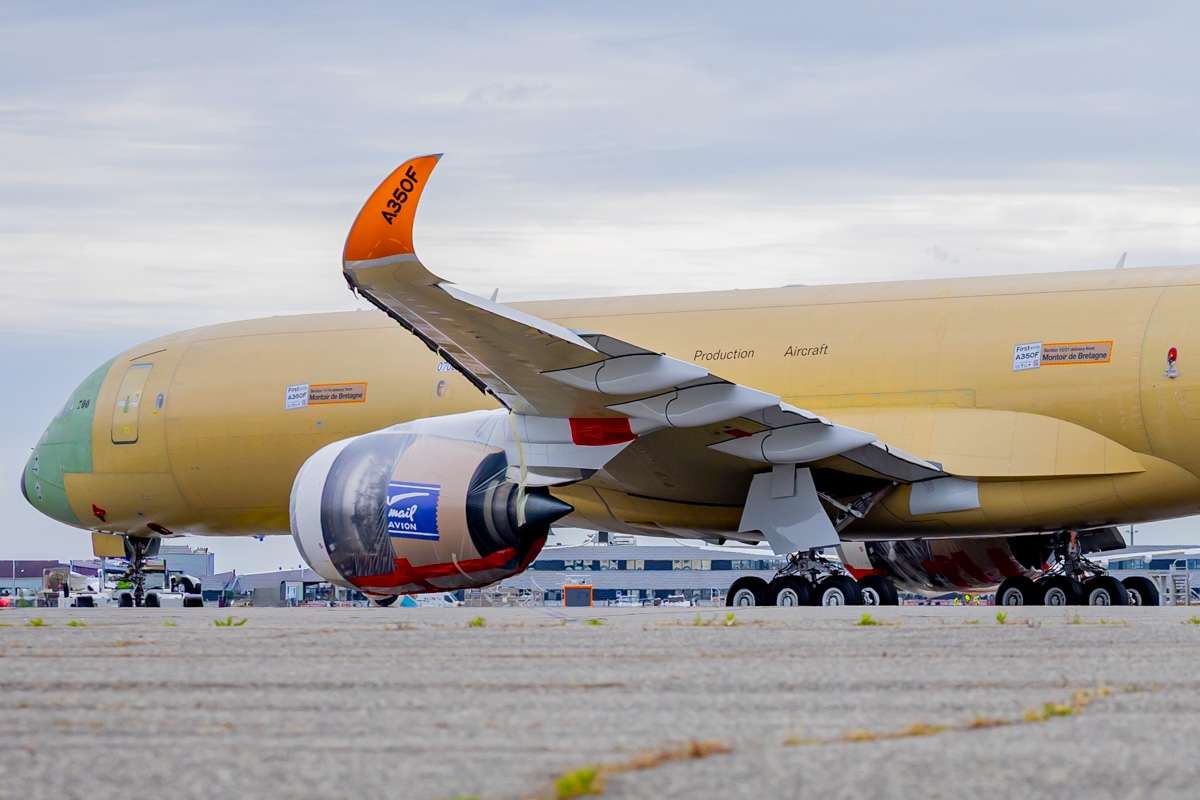
Ethiopian Airlines is inching closer to announcing an order for up to 50 new aircraft across its single-aisle and freight divisions, following lengthy analysis and negotiations.
As part of comprehensive efforts to now grow the operation and redefine flying to/from Africa, the roadmap for the Ethiopian carrier includes the need for single-aisle and freighters.
After years of aggressive expansion, the decision is nearing completion, with the Farnborough Airshow next week positioned as a possible time to announce the chosen direction.
A Decision For 50 Jets
Speaking at the inaugural flight to Mauritius following its touchdown, the Chief Commercial Officer, Lemma Yadecha, said the airline is conducting the final evaluation of an order for 25 single-aisle jets, including options for a further 10, bringing the total to 35.
The shortlist includes three options across three planemakers, and this interest has been documented for some time. As part of the pitch, the airline has been considering the smallest Boeing 737 MAX variant, Embraer’s E‑Jet E2 family, and the Airbus A220.
These planes all reflect a search for a model that can slot below the 737 MAX fleet and serve thinner, more regional routes while delivering in the 100-150-seat market.
Away from the single-aisles being studied, Ethiopian Airlines is also moving forward with what the CEO, Mesfin Tasew, describes as a grand cargo expansion aligned with the Vision 2035 strategy, and this decision on up to 16 freighters, including eight purchase rights, is ongoing.
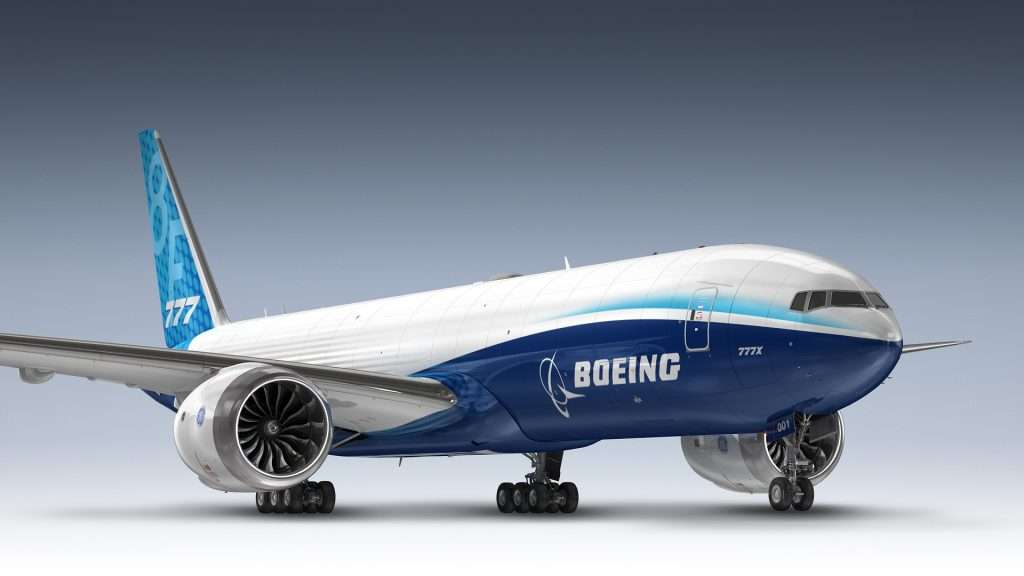
With a decision flagged for the coming weeks, the joint passenger and freighter announcements are well positioned to be unveiled at the Farnborough Airshow, where industry visibility is at an all-time high.
For Ethiopian Airlines, much of its pursuit of new jets stems from its own strong growth ambitions, but order books, especially at Airbus and Boeing, are filling fast into the early-2030s. This makes securing availability at desired times more challenging.
If an airline, in this case the Ethiopian carrier, wants planes, it needs to move quickly to secure slots to support growth and deliveries from the source, rather than relying on either operating older aircraft or on lessors providing the jets.
E2 and A220: A New Angle For Ethiopian Airlines
For years, Ethiopian Airlines has had a distinct fleet mix, with the smaller turboprops sitting below a fleet of single-aisle 737s and widebodies above that. However, given the current competition and after a lengthy evaluation period, the African carrier has an appetite for something between turboprops and 737s.
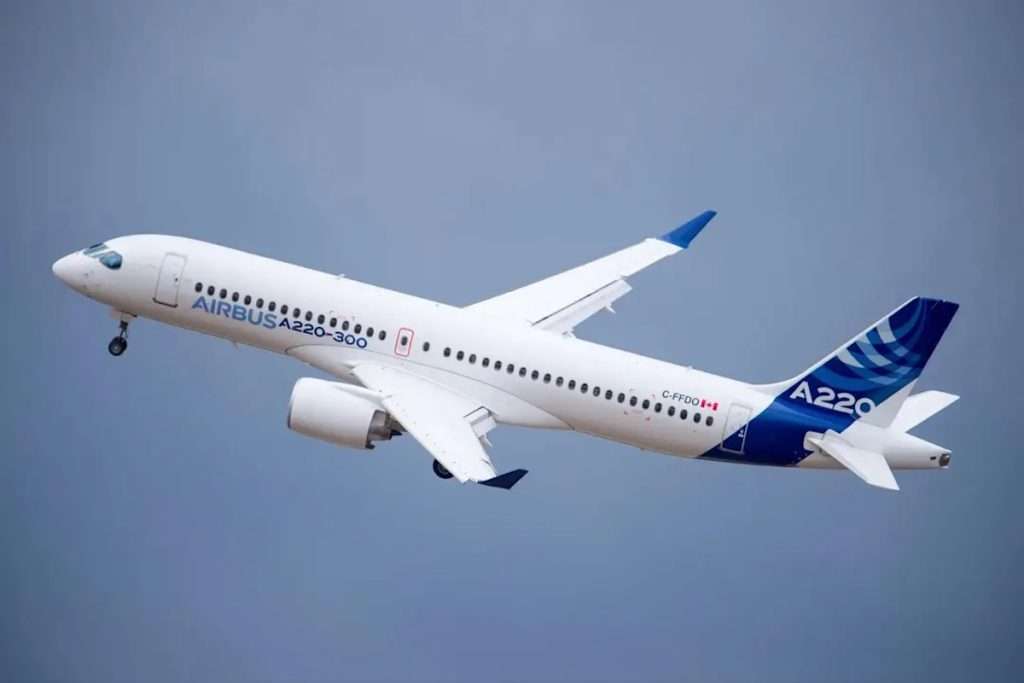
As a result, the Embraer E195-E2 and Airbus A220-300s both fit the middle-of-the-market slot between turboprops and an aircraft like the 737. The E2 is an emerging success story for the Brazilian planemaker Embraer, with worldwide adoption and a strong capacity/range to go with it.
Meanwhile, the A220-300 offers a strong seat capacity and a slightly larger range than the E195-E2, making it ideal for larger airlines looking to scale their narrowbody operations. In the case of Ethiopian, both of these jets are up for consideration, as has been the smallest 737-7, which is a mere week away from certification.
Either one of these jets that will be ordered would give Ethiopian Airlines the support it needs for the missions it’s targeting, that is, serving growing secondary African cities and connecting regional capitals to its hubs with a jet that is fine-tuned for this exact role.
While aircraft like the 737 MAX are a perfect single-aisle fit, at times, thinner routes that still require flying cannot justify a MAX-type aircraft or a widebody, and thus, deploying a purpose-built alternative makes the most sense.
For Embraer and Airbus, while Boeing is pitched as an option and the MAX is already present, they would feel more confident in this segment that their jets are ideally suited to the targeted mission. However, Boeing has the upper hand from a commonality standpoint, with the airlines’ fleet more heavily skewed towards them, with the 737, 777, and 787 all present.
The decision will come down to much, but certainly simplicity and commonality within the 737 MAX family will help Boeing, even if their 737-7 isn’t often considered the optimal choice for what the airline is targeting, the A220/E2 seems more ideal.

ABOUT THE AUTHOR
Daniel Fowkes is a Melbourne-based aviation analyst and journalist with over a decade of industry experience. As founder of Dj’s Aviation, he delivers trusted analysis on aircraft, airline strategy and global aviation trends for djsaviation.net
Related Articles




Stay Informed
Get the latest aviation news, analysis and route updates delivered to your inbox.
We respect your privacy. Unsubscribe at any time.
Enjoyed this story?
Make us your go-to for aviation news
Add us as a preferred source on Google and see our latest stories first in Top Stories.
Add Us On Your News Feed