
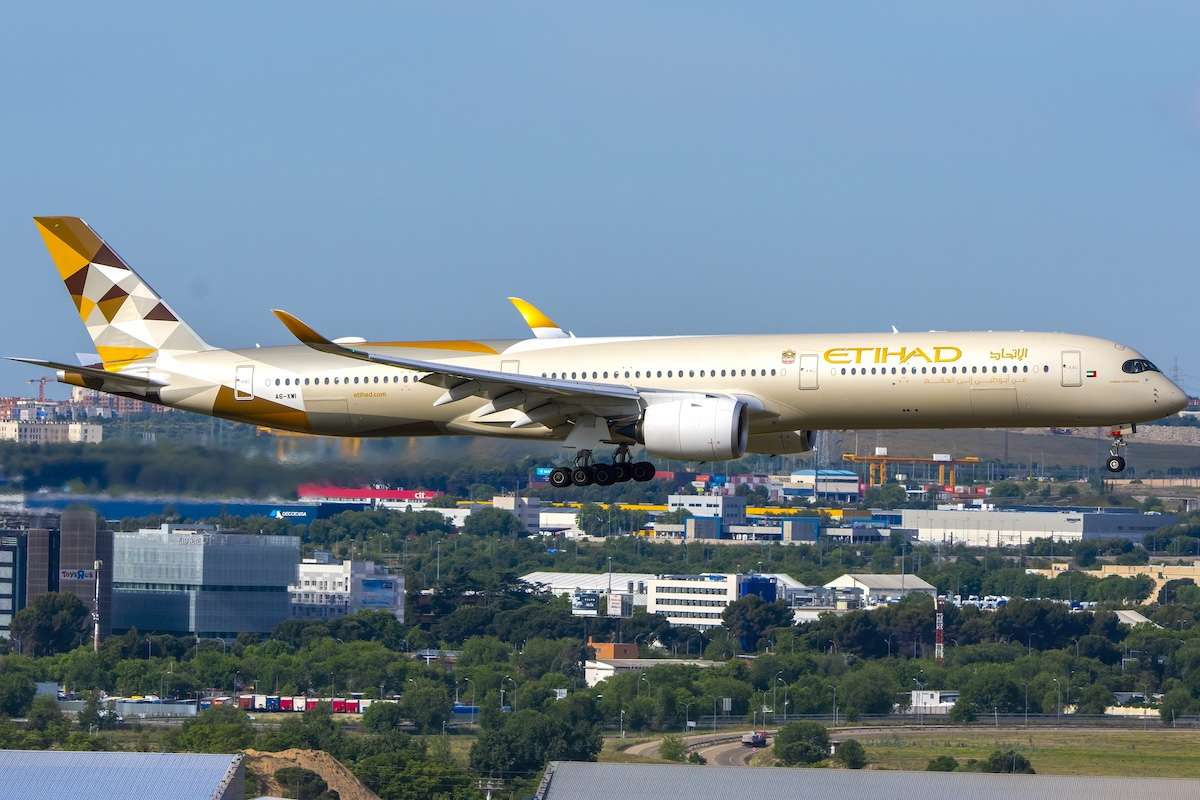
Etihad Airways is preparing to go back for more widebody aircraft, which would represent a new order as part of efforts to scale its capacity and network.
On the sidelines of the IATA AGM in Rio de Janeiro, the airline’s CEO, Antonoaldo Neves, confirmed that it’s seeking to acquire double-digit numbers of planes to overhaul its widebody operations.
That ongoing process did not reveal any specifics on the aircraft types to be selected, how far along the discussions were, or, therefore, the delivery timeline.
With that said, it comes amid increased stability following the Iran War, as it has restored and now surpassed pre-war capacity, building on an encouraging last 12 months before the conflict affected its ability to serve its network.
Etihad Airways’ Order Book Is Strong
Etihad Airways currently has many aircraft on order, but that doesn’t always mean it’s enough for a Gulf carrier with strong ambitions to increase its capacity, fleet, and more. This is why there’s now an appetite for adding further planes.
Over the past years, and following turbulence after record-breaking losses, the airline has repositioned itself for growth by locking in many twin-engine widebodies from Airbus and Boeing to support its Journey 2030 targets.
Whether it has been the more recent mid-2025 deal that included the Boeing 787 and 777X, two already present jets in the order book, but this is a top-up to a contract. Then the airline expanded its Airbus widebody commitment to include the A350-1000 and, for the first time, the A330neo; many variants are now covered.
Partially for the airline, it’s about its scale, but the timing of the deals is important, as many leading aircraft lessors flag widebody availability becoming scarcer thanks to strong purchases by Etihad Airways and the like. As a consequence, delivery slots are being snapped up, and airlines wanting to get planes directly from planemakers need to act sooner rather than later.

Taking just the 2025 commitments together, the business ordered around 60 new widebodies, in addition to its existing fleet and many other aircraft still on order, providing a healthy backlog.
A New Order Or Options?
The latest reports also place little emphasis on the structure of the deal itself, focusing instead on Etihad Airways’ efforts to secure firm orders for the future. As a result, that may not mean a deal is done through the new orders themselves, but rather by dipping into its many available options.
As most international airlines do, when a new order is placed, there is a mix between firm orders and options. Those options present themselves as the perfect means for an airline that, many months or years later, has misjudged or needs more time to secure additional aircraft, and can act on them more simply than by renegotiating the whole deal.
Etihad Airways has nearly 30 commitments to Boeing and over 30 to Airbus, part of its ongoing widebody expansion phase, that could be actioned instead of a one-off splash with fresh terms and delivery windows if it wanted to stick with commonality.
Operationally, this also comes at a time when Etihad Airways is increasing its flying. Despite the Iran war, it’s flying 8% more than on 15 June 2025, which is expected to be seen on June 15, 2026. New aircraft deliveries have played a major role in making this possible.
As traffic continues to recover and its tourism and hub strategy proves to be a winner, the appetite to commit to more commercial widebodies hasn’t been stronger, and there are many ways to do this through a new contractual agreement or by dipping into options.
So Many Possibilities For Etihad Airways
For a Gulf carrier like Etihad Airways, the possibilities for new aircraft are seemingly endless, and the final decision, not just to be considered, is based on options in existing deliveries, but where the airline wants to fly its new planes, what their purpose is, configuration, and proposed replacement.
The ability to scale widebody operations means the airline will not only be able to launch new long-haul flights but also increase capacity in existing markets where more services are required on a weekly or daily basis. Those new-gen jets like the 787, 777Xs, A350-1000s and A330neos provide different, capable platforms to make this happen.
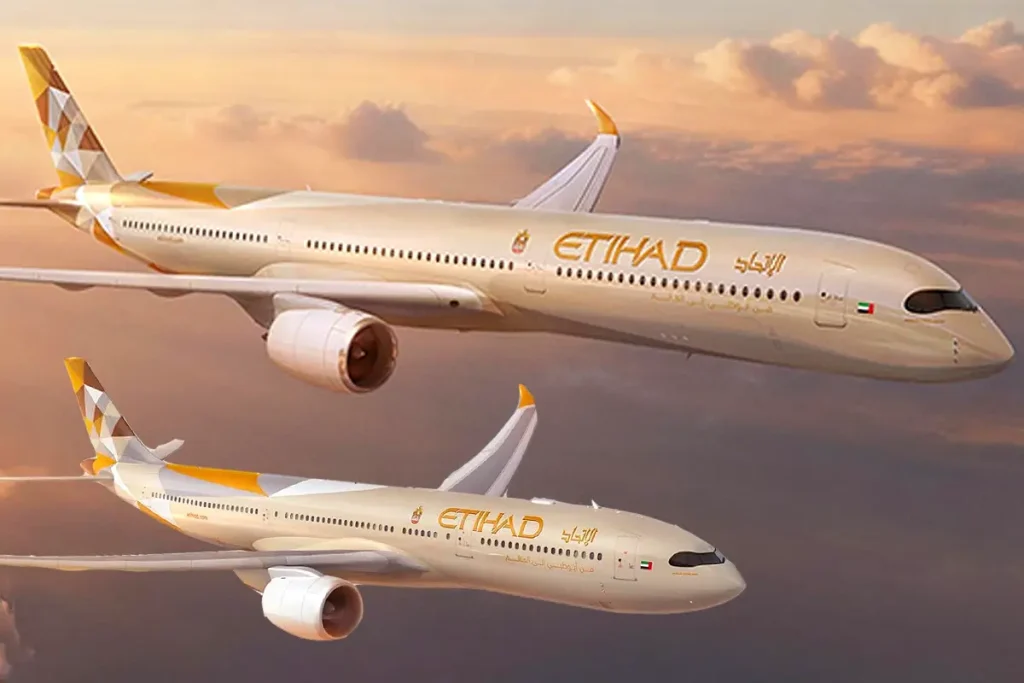
Fleet renewal remains also still important, the airline flying some older aircraft in the 777 and A330 families, where the continued delivery of new planes and the strategic mix will help ensure that this progressive retirement doesn’t have an impact on the capacity being offered
For Etihad, the chance to select more 787s or the 777X, which is yet to be delivered, is possible, as options are available and delivery is planned in the coming years.
The A350-1000 already serves Etihad’s network with its high capacity, providing a strong basis for scaling the airline’s international operations. Then there are the new A330neos, a more recent addition, pitched as the perfect mid-sized widebody for missions where the larger A350s or 777Xs do not suit, but the A321LR remains too small.
While a firm decision has been made public on the direction, what cannot be ignored is the airline’s acquisition and continued pursuit of new planes as traffic returns to pre-war levels and is only set to increase the need for jets over time.

ABOUT THE AUTHOR
Daniel Fowkes is a Melbourne-based aviation analyst and journalist with over a decade of industry experience. As founder of Dj’s Aviation, he delivers trusted analysis on aircraft, airline strategy and global aviation trends for djsaviation.net
Related Articles




Stay Informed
Get the latest aviation news, analysis and route updates delivered to your inbox.
We respect your privacy. Unsubscribe at any time.
Enjoyed this story?
Make us your go-to for aviation news
Add us as a preferred source on Google and see our latest stories first in Top Stories.
Add Us On Your News Feed