

Emirates’ repeated calls for the A380neo highlight one thing: the company’s desire to fly large aircraft.
However, as its A380-800 fleet begins to age and a dedicated replacement doesn’t exist, what’s driving the requests?
Ultimately, will the Dubai-based carrier get its way with planemakers, and what on earth is it proposing as a solution to its capacity requirements?
The Airbus A380 Problem
Much of Emirates’ calls for larger aircraft trace back to its A380 problem, a problem that stems, ironically, from its love of the aircraft and its firm reliance on it.
Being the world’s largest operator of the world’s largest passenger plane comes with its associated benefits for a company such as Emirates; however, it is now beginning to have downsides.
Airbus has ceased production of its A380-800 and has opted against tailoring a dedicated replacement, leaving the small number of airlines that see positive results from operating the jet without an ideal replacement.
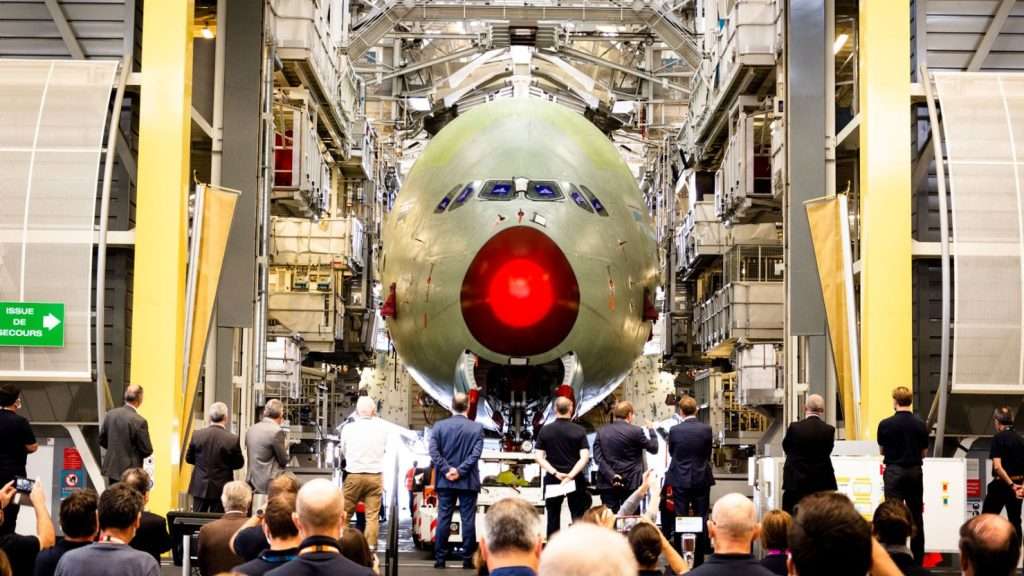
While that may be more manageable for an airline such as Qantas, which is looking to the A350-1000 to fill the void of the A380-800, for Emirates, which has over 100, it presents problems.
Without a dedicated replacement, the airline will be forced to sacrifice capacity across key markets or up-gauge services with newer twin-engine aircraft, in turn requiring more staff, gate space, slots and more.
Emirates Calls On The A380neo
One of Emirates’ best-known responses to the desire for larger, more efficient aircraft has been the Airbus A380neo, albeit one of its more ambitious calls, given the planemaker’s stance on this program.
Emirates’ calls for the A380neo are not recent; the airline’s executive, Sir Tim Clark, has recently reaffirmed his interest. These calls date back to the mid-2010s, when the airline was seeking alternate ways to boost efficiency across its fleet.
The Dubai-based carrier hoped that as the A380-800s reached older age, the A380neo would serve as the perfect like-for-like replacement and address concerns raised by some operators about the efficiency of the first model to market.
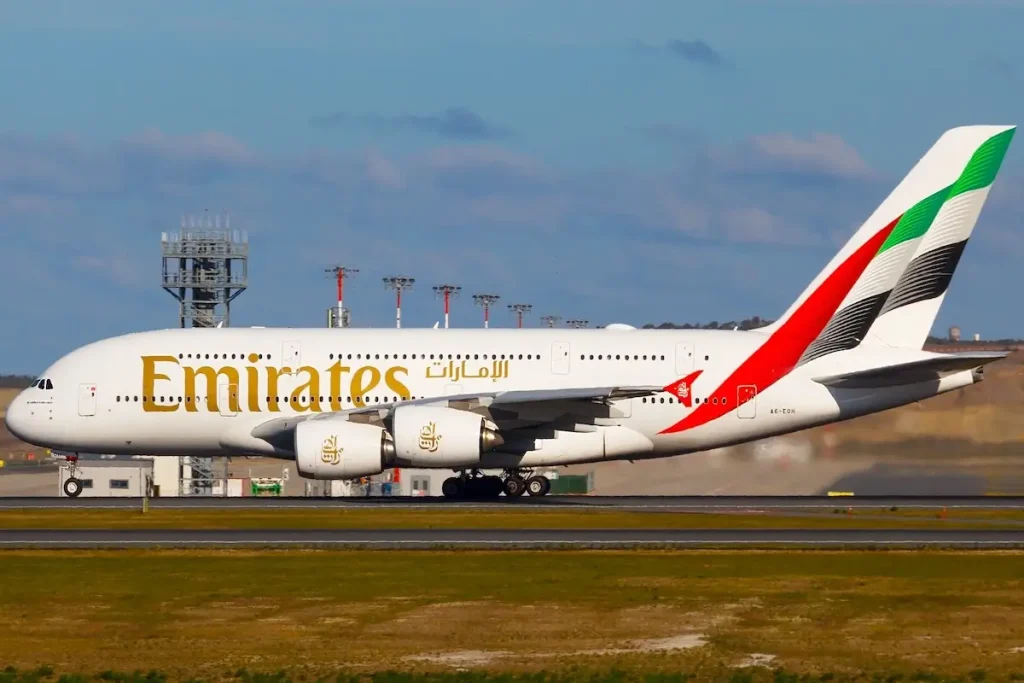
However, Emirates’ calls for this larger aircraft have gone unanswered. At the same time, Airbus evaluated the possibility of an A380neo in the mid-2010s at the request of a handful of businesses that may have been interested.
Airbus would instead opt for an A380plus and last-ditch sales pushes for its A380-800, all of which would fail and Emirates’ decision to cancel remaining A380 orders towards the backend of the 2010s would put the nail in the coffin of the world’s largest passenger plane and see production cease at the top of the 2020s.
Now, the A380 is a distant memory for Airbus, with no active production and instead priorities elsewhere, with the likes of the A321neo program thriving and the A350 acting as the flagship, certainly a far cry from the double-decker nature of the A380-800.
Larger Twin-Engine Aircraft?
What the unwillingness to produce a successor to the A380 means for an airline like Emirates is that its pursuit of larger aircraft for its operations over the coming decades becomes more challenging.
With that being said, that hasn’t stopped Emirates’ more recent pursuit of larger aircraft, this time in the form of twin-engine aircraft, which it hopes have a better chance of being produced, given that both available families are active and in demand.
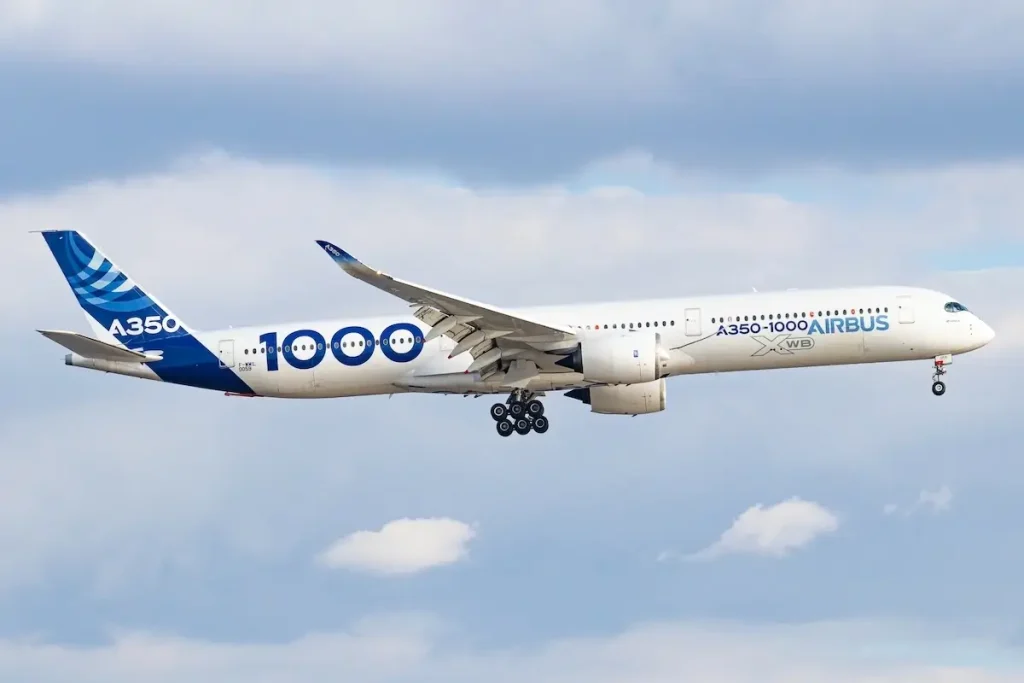
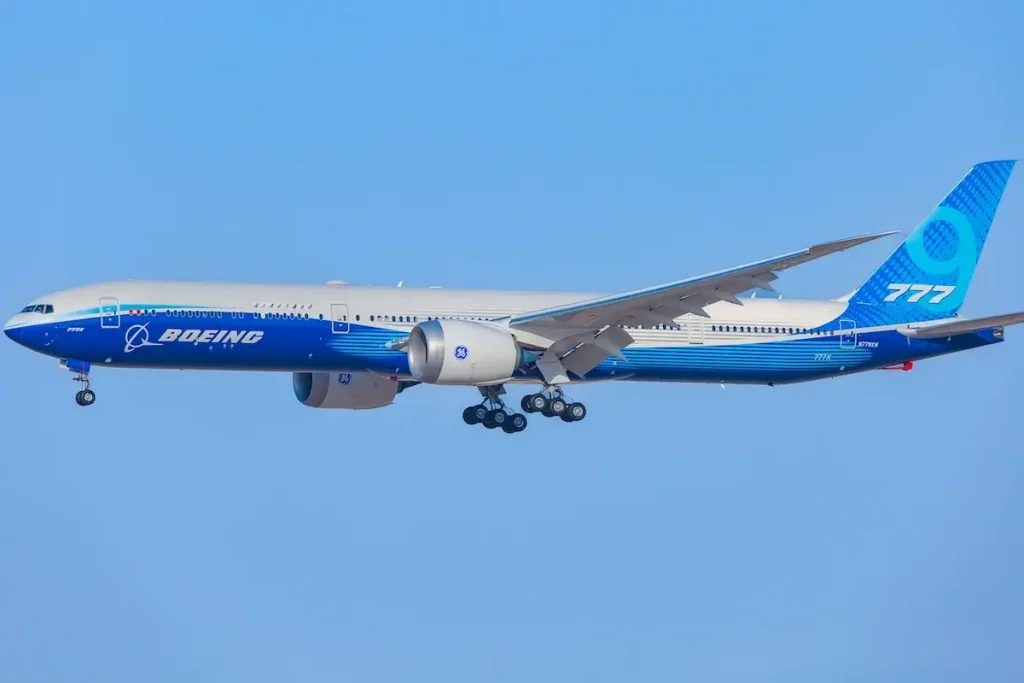
Much of Emirates’ interest lies with the A350 and 777X families, and with the A350-2000 and 777-10 models, as they have been dubbed. Both models are yet to be formally released, but have been of interest across the industry for some time.
These two prospective jets, if executed, would represent a jump over the current largest model in both aircraft series and thus give airlines such as Emirates the chance to operate significantly larger aircraft than are still available on the market.
Emirates foresees that both models, if launched, will be capable of seating well over 400 passengers, depending on the configuration, while providing the optimal flexibility to configure each aircraft in different ways to cater to premium and high-density layouts.
Emirates believes that while the A380neo remains the dream aircraft, for which it has already put forward draft proposals to Airbus and a commitment to buy the program, these extended twin-engine jets are more likely to get the green light at some point.
Only in recent weeks did analysts close to the industry comment on the interest, saying that when an airline like Emirates comes forward with requests, you listen for the possible long-term benefits, which would be more than present. They likely are not the only airline seeking something similar or will require something like a stretch later down the line.
Airbus’ A350 Stretch, as it has also been known, has been under discussion for years now; however, towards the backend of the 2010s, the planemaker’s CEO said that the priority lay with the currently available models, not via a stretch at that point.
Meanwhile, the 777-10 achieved technical feasibility in the mid-2010s following studies conducted by the planemaker to develop the program further; however, unfortunately, the 777X has since encountered issue after issue, leaving new endeavours such as this one as the last priority for the moment.
What Will Actually Happen?
While Emirates continues to push for a larger aircraft than what is currently on the market to be built, all its calls thus far have gone unanswered, largely due to the many existing complexities with planemakers Airbus and Boeing.
Airbus is awaiting certification and the formal launch of its A350 Freighter, while also getting the first A350-1000ULR delivered to Qantas for Project Sunrise; these two models are the focus for the moment.

Meanwhile, over at Boeing, there are three models in the 777X family, and all are not just uncertified but massively overdue. Airlines like Emirates are still waiting for the delivery of their first aircraft, five years after initial expectations.
As a result, Emirates and Sir Tim Clark continue to push for the release of a higher-capacity model, and while these calls may one day be answered, for the moment, both planemakers have much to navigate.
Emirates would, however, argue that, despite its strong desire for an A380neo, if it truly stands a chance of getting its desired large plane, it’ll only be through models still in production, which is why it’s laser-focused on the A350 and 777X families.

ABOUT THE AUTHOR
Daniel Fowkes is a Melbourne-based aviation analyst and journalist with over a decade of industry experience. As founder of Dj’s Aviation, he delivers trusted analysis on aircraft, airline strategy and global aviation trends for djsaviation.net
Leave a Reply
Related Articles




Stay Informed
Get the latest aviation news, analysis and route updates delivered to your inbox.
We respect your privacy. Unsubscribe at any time.
Enjoyed this story?
Make us your go-to for aviation news
Add us as a preferred source on Google and see our latest stories first in Top Stories.
Add Us On Your News Feed
The A380 is the best plane I’ve flown in.
Very impressive at a time of world transitional change Airlines look the way forward.