
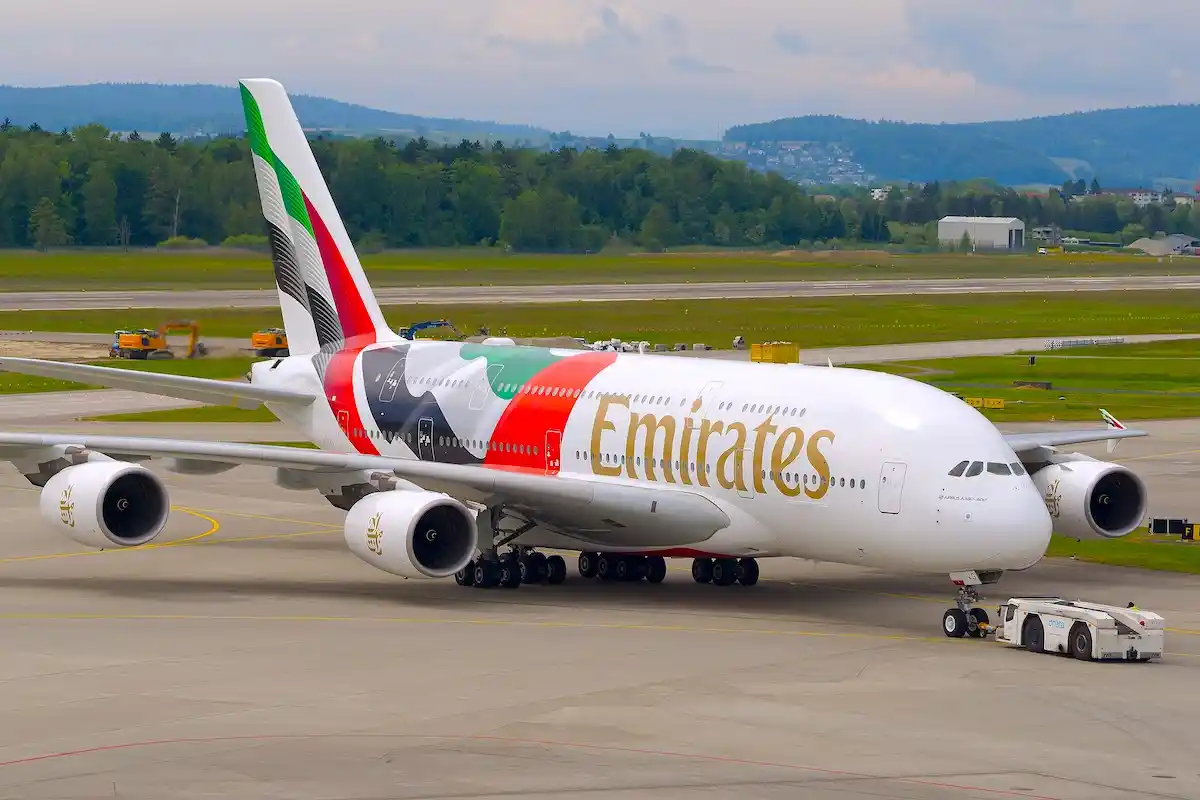
Emirates expects to retire its Airbus A380 fleet around 2040, clarifying the fate of the world’s largest passenger plane.
While exact phase-out details remain unclear as the retirement date sits 14 years away, the aircraft has ultimately driven the airline’s success in the 21st century.
Even with Emirates setting an outline for a 2040 retirement for the world’s largest passenger plane, it will likely still be the last operator, as other airlines pivot away from it toward more efficient twin-engine aircraft.
Adel Al Redha, Deputy President and Chief Operations Officer, said the A380 operation is planned to continue as long as it remains economically and technically viable.
Beyond demand metrics, which are expected to remain sufficient to support the quad-engined widebody, future maintenance demands and other operating costs will rise as the fleet ages.
Speaking with The National, Al Redha said the A380s’ withdrawal is something the airline has had in mind for years, and that incorporating aircraft like the 777-9 is already part of the ongoing fleet plan.
The A380s retirement approaches slowly but is coming
A 2040 retirement means Emirates will fly the A380 until the first batch of 777-9s reach past mid-life, and while that is still 14 years away, preparations must begin now for an aircraft type tallying above 100 units.
Emirates operates 116 Airbus A380-800s, according to the latest fleet data, with just 84 active as of 23 September 2026 because ongoing retrofit work is taking airframes out of service.
With over 100 aircraft remaining, the airline is comfortably the largest customer of the Airbus type and supported the programme’s short production life, which would’ve run even shorter without the Dubai-based carrier. Today, the aircraft remains critical to high-density and long-haul operations out of Dubai International.

Emirates has defined its operations around the Airbus A380, leveraging its capacity not only to increase seat counts to many international cities but also to support premium traffic with innovative cabin products only possible on an aircraft the size of the A380.
A detailed aircraft-by-aircraft retirement sequence by Emirates has not been outlined. However, the 2040 indication is the latest in a string of comments the airline has made over the years as it plans for future decades and its fleet mix.
The 2040 timeframe remains consistent, with Tim Clark, the airline’s President in 2023, saying the aircraft would be retained into the early 2040s to meet the persistent need for ultra-high-capacity airframes and extract maximum life from each unit.
Emirates typically keeps its fleet as youthful as possible, preferring to retire aircraft earlier than the average airline. However, that business model has shifted, not just because of the A380’s role and lack of a dedicated replacement, but also because next-generation jets have arrived later than expected.
Emirates A380 retirement date gives time for something new
While Emirates plans for a 2040 retirement for the Airbus A380, and this is still more than a decade away, this gives the carrier the time it needs to wait for manufacturers to move forward with studies for a larger twin-engine jet.
Airbus and Boeing are currently studying the prospect of stretching their current largest aircraft in production across the A350 and 777X families, respectively. The stretch, while not a dedicated replacement for the A380, would be the next best option for airlines like Emirates, which still desperately need capacity.
Airbus has hinted at an A350 Stretch-type aircraft for some time; in the 2010s, discussions emerged over this prospective variant but quickly cooled as a pandemic, subsequent supply chain problems, and other financial pressures halted development, and the planemaker chose to focus strictly on what it was already working on.
However, in late 2025 the manufacturer confirmed that feasibility studies were underway, and after private discussions with several customers, interest grew in producing such a type.
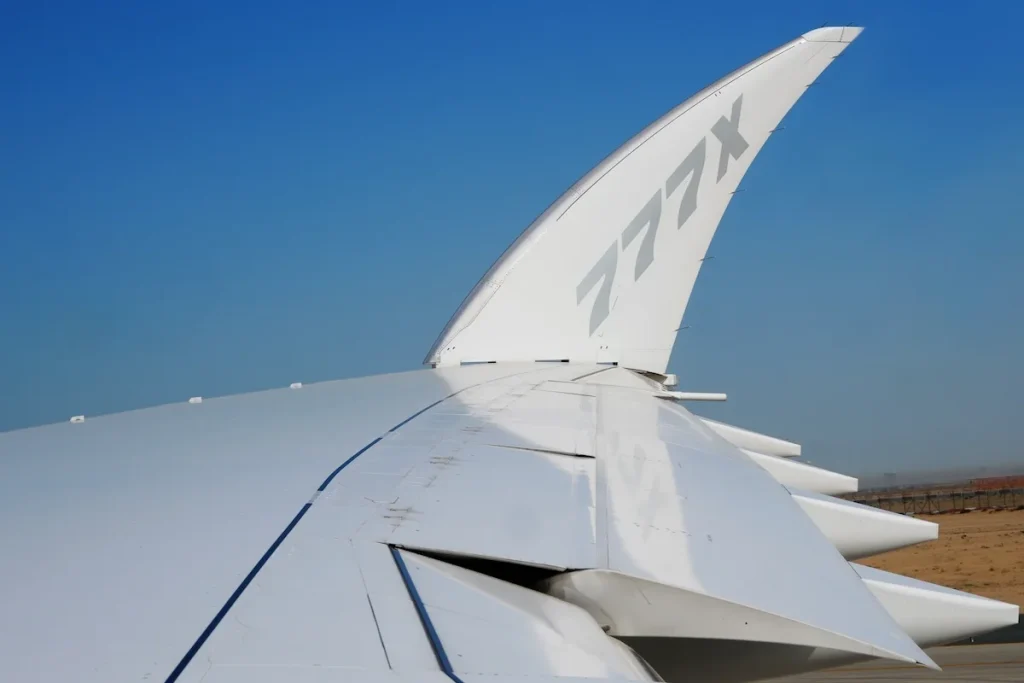
Boeing received its strongest backing for a larger 777X, dubbed the 777-10, in late 2025, when its leading customer for the 777-9, Emirates, committed to an additional 65 units at the Dubai Airshow. During the order and press release, the planemaker and airline confirmed the new contract provided the support needed to advance 777-10 studies.
Both prospective stretches remain in the works, and with nothing firm yet, the 2040 retirement timeframe for the A380s gives ample opportunity for either the A350 or 777X family to move forward, be released, and enter service.
If Emirates gets its wish for a larger twin-jet after the failed pursuit of the A380neo, it would lessen the blow of the A380-800 no longer being available. However, without a dedicated replacement and with the jet integral to its strategies, it ultimately complicates matters.

ABOUT THE AUTHOR
Daniel Fowkes is a Melbourne-based aviation analyst and journalist with over a decade of industry experience. As founder of Dj’s Aviation, he delivers trusted analysis on aircraft, airline strategy and global aviation trends for djsaviation.net
Related Articles




Stay Informed
Get the latest aviation news, analysis and route updates delivered to your inbox.
We respect your privacy. Unsubscribe at any time.
Enjoyed this story?
Make us your go-to for aviation news
Add us as a preferred source on Google and see our latest stories first in Top Stories.
Add Us On Your News FeedRelated articles
· Airlines
Allegiant Air Buys Six More 737-8s From Boeing
Daniel Fowkes
26/10/2026
· Airlines
Emirates vs Qatar Airways: The Gulf Superhub Rivalry Compared
Bryan Shelmon
26/10/2026
· Airlines
Riyadh Air Is Moving Away From Riyadh
Daniel Fowkes
26/10/2026
· Airlines
Emirates Isn’t Worried At All
Daniel Fowkes
25/10/2026