
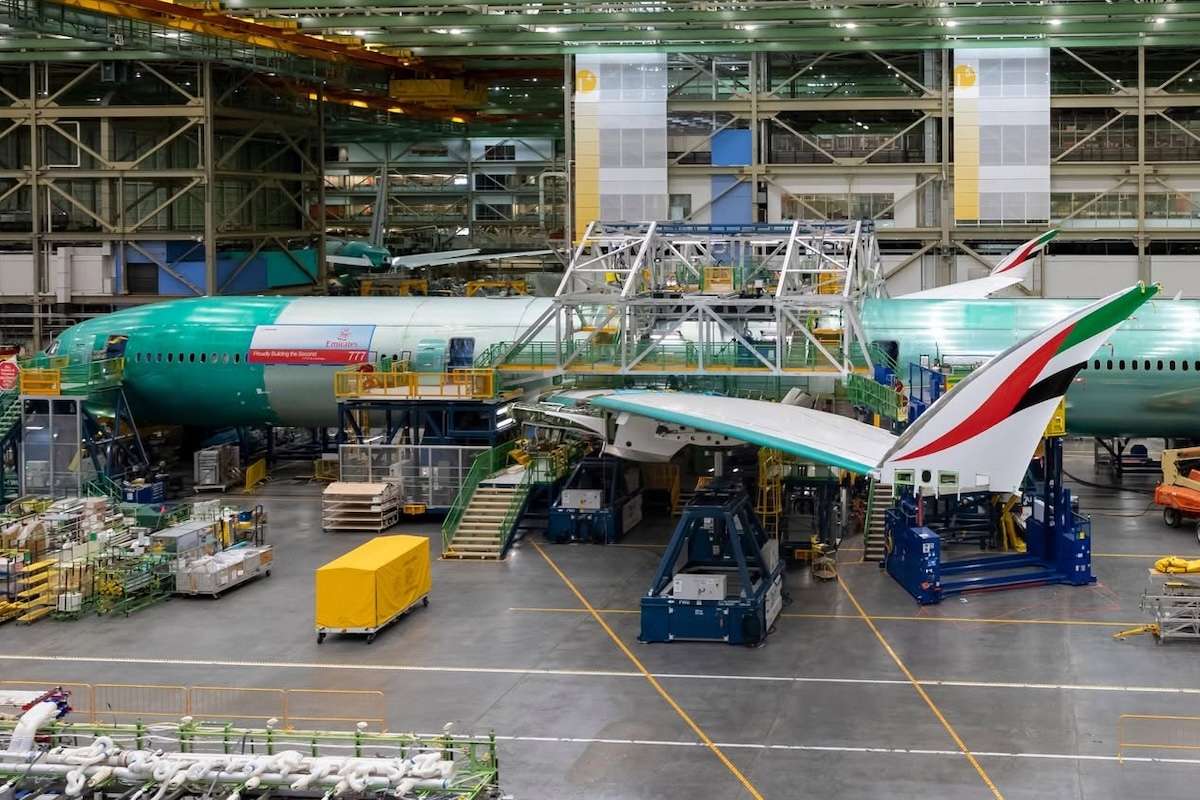
Emirates President Sir Tim Clark is pushing Airbus and Boeing to keep innovating and voiced his displeasure further over the continued delay of new aircraft deliveries.
Comments from the President of the Dubai-based carrier come even as other airlines have urged against rapid innovation and want a slower, more methodical approach to developing new jets after a bruising last decade for the industry.
Clark, however, sees great frustration with the 777-9, which, while finally nearing its certification, was meant to be flying by April 2020 with the airline, but instead won’t debut until late 2027, when Clark feels the technology will feel closer to a product of a previous era than a new flagship.
Clark Hints The 777X Is Too Late?
From the perspective of Emirates, the 777X delays haven’t just been a schedule slip, but rather a long drawn-out process that has acted as a constraint for the business. Clark has repeatedly stated that the fleet of 777-9s would now be at a forecasted 80 if original commitments had been met.
Instead, the 777-9 is yet to debut, and Emirates has been forced to increase the investment in its existing models like the A380 and 777-300ER with a multi-billion-dollar and largest retrofit process it has ever undertaken. These billions were used not just to improve production but to extend the life of these jets to mitigate replacement aircraft delays.
Boeing sold the 777-9 as the backbone of the fleet, and while it’ll remain that thanks to the orderbook being so strong, the wait has been agonising, with deliveries having repeatedly slipped throughout the 2020s to now 2027.
The knock-on effect means the jet has run straight through network planning and capital expectations, with the business frustrated that its wings have been clipped by the lack of new planes made available and the forced restraint on renewal as a result. The Dubai-based airline is now also rejecting early build 777-9s.
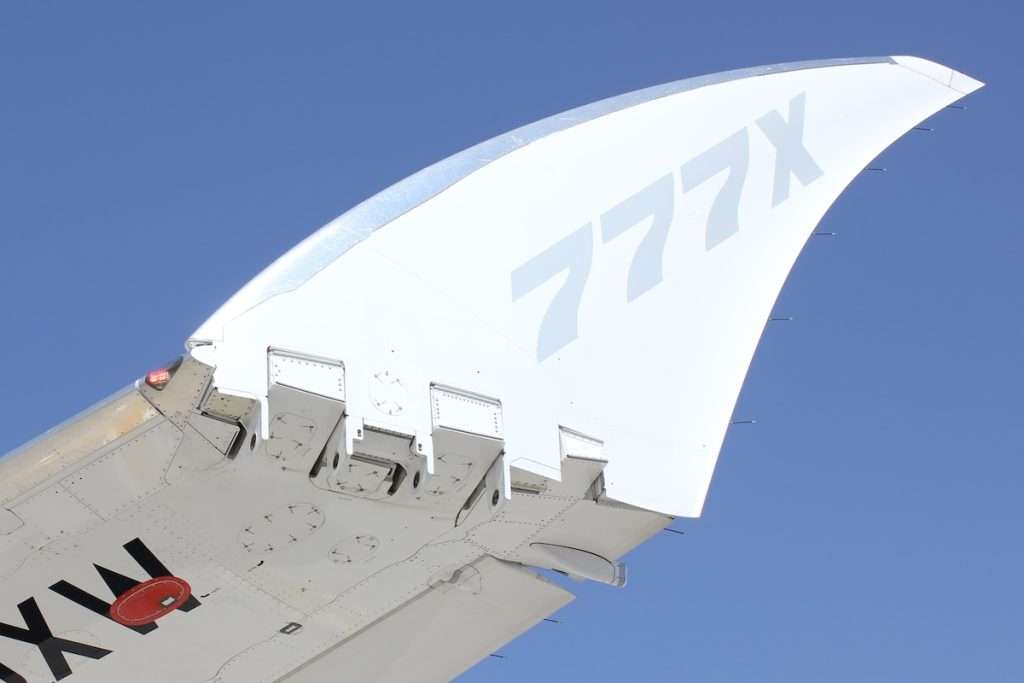
While the delay has angered Clark, it has also been a communication issue, with learnings from the latest 2027 push from 2026 only coming to him via public statements before he was briefly informed directly, as the largest customer with over 200 models on order.
However, overlaying all of this is the sense that Clark now has that once the 777-9 enters service, the technologies that it harbours, while a significant upgrade on models like the 777-300ER and A380, will still date from a mid-2010s design phase. That lack of innovation was what analysts pointed to as one of the many reasons Boeing also didn’t move forward with its own NMA in the late-2010s.
In other words, for Emirates, the next wave of efficiency and decarbonisation is already being planned. Therefore, from his point of view, the 777-9 wouldn’t have been a concern if there hadn’t been a seven-year acquisition delay and 80 of the type would’ve already been flying.
Can Emirates’ Frustration Be Justified?
Clark’s position is shaped not just by years of delays and being misled, but by the unique model it operates, which positions it unlike most other flagship international carriers. Emirates operates with a hub-and-spoke network that depends on high-capacity and long-range jets to funnel traffic through Dubai.
Additionally, the airline has built its brand on a youthful fleet and a consistent product. When the 777X slips by seven years, it’s not a mere inconvenience; it forces the business to completely scrap the carefully staged plan intended to be initiated through retirements and schedule shifts.
Measured against the promises Boeing made to Emirates when it first committed to the jet in 2013, it’s not uncommon for new jets to be delayed; the A321XLR is one of the more recent examples of certification taking longer than expected. However, the 777-9 and Emirates have been an extreme pairing.
Clark isn’t blind; he acknowledges the need to meet safety and quality standards, but has criticised management’s choices heavily. The calls now to keep innovation going put further pressure on planemakers and aren’t a straight demand for recklessness, but rather a desire for the next thing to help this business evolve.
Where Emirates sees its frustrations parallel to competitors is that, following multiple Boeing crashes, groundings, and financial pressure while new planes are in the pipeline, the manufacturer is taking a step back to try to work through the remaining roadblocks. At Airbus, there are also new jets in the works, but existing pressures must be worked through as well.

Emirates’ push for innovation, while warranted thanks to its business model, is something not seen industry-wide, with airlines still pushing for measured innovation to ensure there are fewer scenarios where they stand to be hurt as a consequence of rushed decisions.
While tensions continue and Clark’s outspoken nature sparks dialogue not seen at other airlines, his comments are blunt: supply chain and safety challenges of the last decade shouldn’t be excuses to stop dreaming and delivering innovative solutions in the 21st century.

ABOUT THE AUTHOR
Daniel Fowkes is a Melbourne-based aviation analyst and journalist with over a decade of industry experience. As founder of Dj’s Aviation, he delivers trusted analysis on aircraft, airline strategy and global aviation trends for djsaviation.net
Leave a Reply
Related Articles




Stay Informed
Get the latest aviation news, analysis and route updates delivered to your inbox.
We respect your privacy. Unsubscribe at any time.
Enjoyed this story?
Make us your go-to for aviation news
Add us as a preferred source on Google and see our latest stories first in Top Stories.
Add Us On Your News FeedRelated articles
· Airlines
Allegiant Air Buys Six More 737-8s From Boeing
Daniel Fowkes
26/10/2026
· Airlines
Emirates vs Qatar Airways: The Gulf Superhub Rivalry Compared
Bryan Shelmon
26/10/2026
· Airlines
Riyadh Air Is Moving Away From Riyadh
Daniel Fowkes
26/10/2026
· Airlines
Emirates Isn’t Worried At All
Daniel Fowkes
25/10/2026
I get that he is correct in his position, there really isn’t anything wrong in any of his commentary on the state of the 777X, Boeing, the Duopoly, etc. I am with him on not taking any of the early build 777-9s too. But some of this is screaming into the wind.
Because beyond Boeing’s horrible performance prior to Ortberg taking the reigns, the entire industry has been beset by supply chain problems. And that doesn’t even include the massive problem that the engine makers have encountered both in production and time on wing. Airbus have bigger issues there than Boeing.
The entire industry is trying to build a cadence that satisfies the current demand, so the complaints about 2010s technology and demands to innovate now – they are just ways for Clarke to publicly get frustrations off his chest. Because its going to be 2-3 more years, at least, of straightening out the current generation of jets and engines before there is a wave of innovation starting and new product being built…