Airline Guide · Full-Service Carrier

Alaska Airlines

Alaska Airlines is a major U.S. carrier and the fifth-largest airline in North America by scheduled passengers carried. Dj's Aviation covers the latest Alaska Airlines news, fleet movements, route changes and policy updates across its West Coast–anchored network below.

NYSE ALK
IATA AS
Founded 1932
Aircraft 342 (mainline)
Oneworld alliance
Alaska Airlines
Airline Fact File
IATA / ICAOAS / ASA
Founded1932 (as McGee Airways)
HeadquartersSeaTac, WA (Seattle–Tacoma)
CEOBen Minicucci
StockNYSE: ALK
AllianceOneworld
LoyaltyAtmos Rewards (formerly Mileage Plan)
Fleet (mainline)342
Destinations140+ cities
12 countries
ModelHub-and-spoke/premium full-service carrier
Primary hubs
SEA
LAX
SFO
PDX
SAN
HNL
ANC

History & Founding

Alaska Airlines traces its roots to 1932, when bush pilot Linious “Mac” McGee founded McGee Airways in Anchorage, flying unscheduled freight and passengers across the Alaska Territory. In 1934, McGee merged with Star Air Service, laying the foundations of what would become today’s carrier. In 1944, the airline officially adopted the Alaska Airlines name, marking its transition from frontier bush operations into scheduled service.

Decades of steady expansion followed Alaska deregulation in 1978, during which the airline pushed south into California and the Pacific Northwest. Alaska Air Group was formed as a holding company in 1985, and it acquired Horizon Air the following year. The carrier pioneered several aviation firsts: introducing in-flight movies to U.S. skies in the 1950s, debuting the world’s first Required Navigation Performance (RNP) approaches at Juneau in 1996, and launching the first U.S. airline online check-in service in 1999.

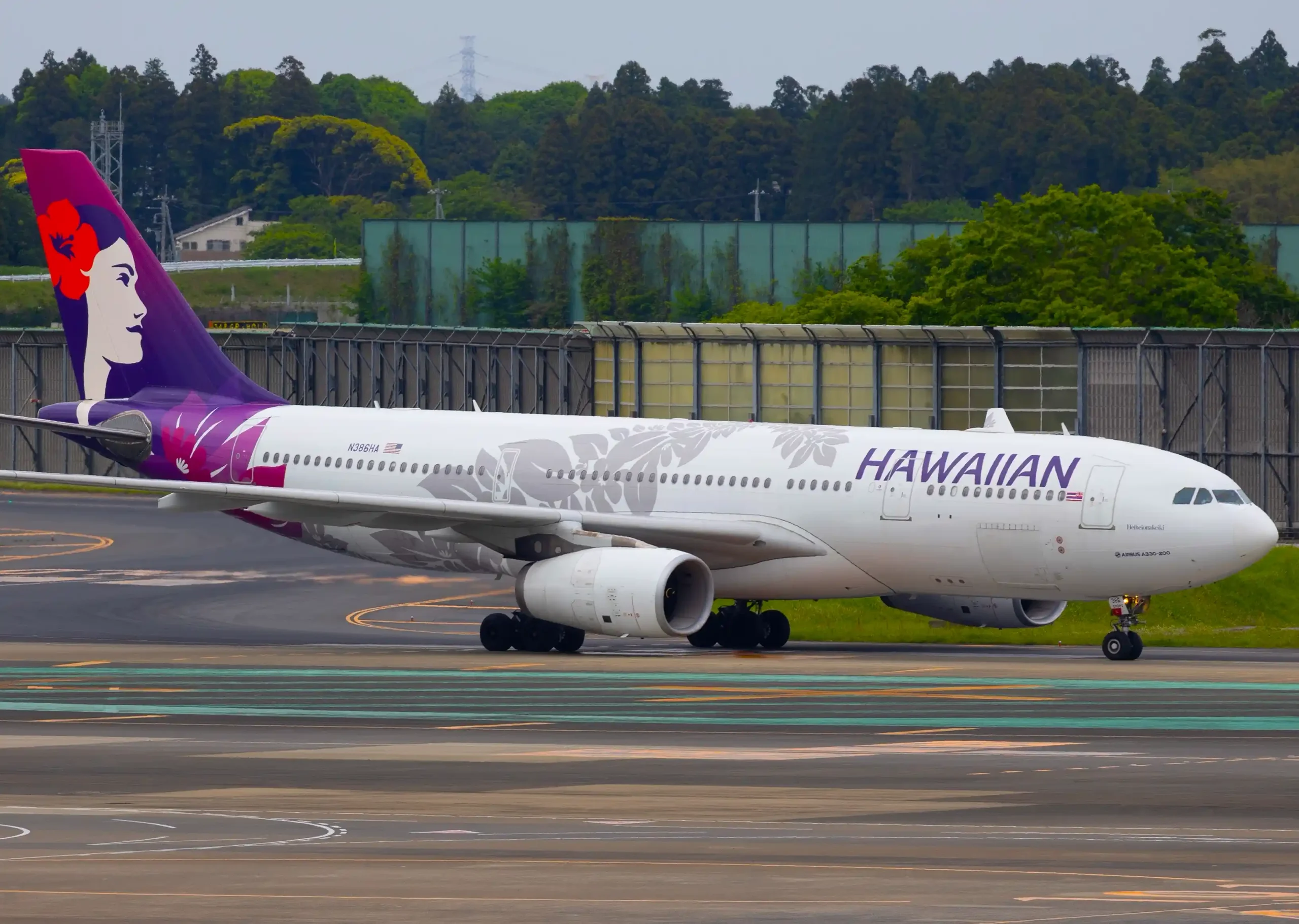
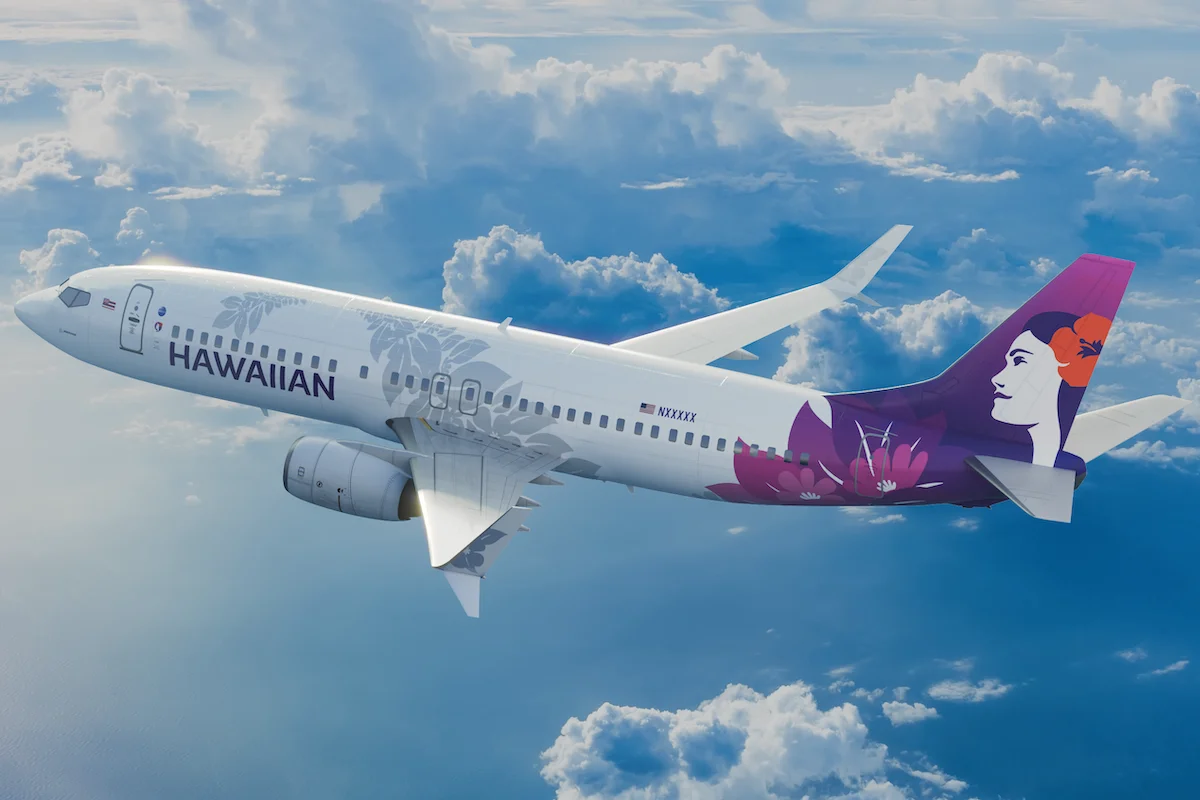
The transformative acquisition of Virgin America was completed in December 2016 for approximately $2.6 billion, bringing California strongholds at San Francisco and Los Angeles into the network. In September 2024, Alaska Air Group completed its acquisition of Hawaiian Airlines for approximately $1.9 billion, making it the fifth-largest airline group in North America and extending its reach deep into the Pacific. A single FAA operating certificate across Alaska and Hawaiian was achieved in October 2025, and the unified Atmos Rewards loyalty programme launched in August 2025.

The 5 January 2024, door plug blowout on Alaska Airlines Flight 1282 was a significant reputational and operational challenge. The NTSB determined the root cause was a manufacturing failure at Boeing, with four bolts missing from the door plug assembly. Alaska proactively grounded its entire MAX 9 fleet before the FAA mandate and subsequently embedded its own quality-control staff at Boeing’s production facilities. No fatalities resulted from the incident.

Fleet

Alaska Airlines operates an all-Boeing mainline fleet, having retired its last Airbus jets (inherited from Virgin America) in October 2023. The fleet strategy prioritises commonality, fuel efficiency, and the youngest average age of any major U.S. full-service carrier.

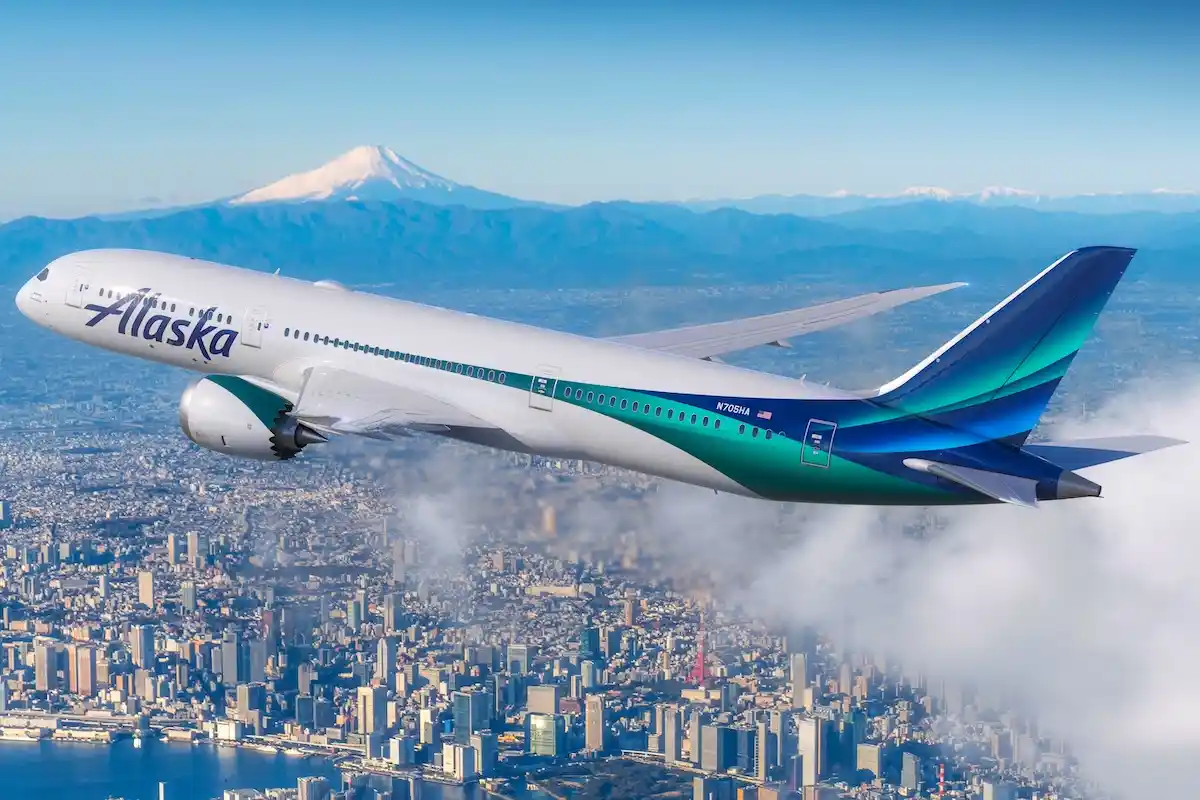
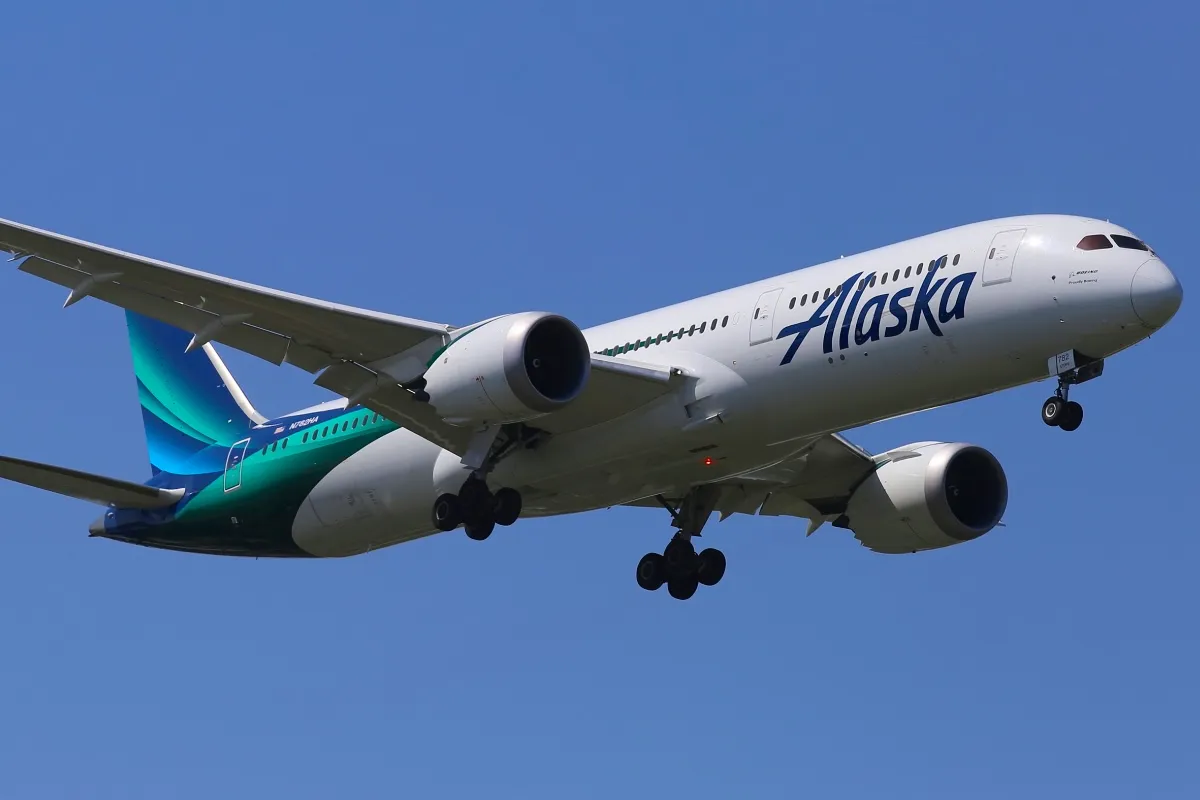
In January 2026, Alaska placed the largest aircraft order in its history: 105 Boeing 737-10s and five Boeing 787-10s, extending deliveries through 2035 and targeting a combined Alaska Air Group fleet of 475 aircraft by 2030 and 550+ by 2035. Five Boeing 787-9 Dreamliners are already in service, operating new international routes from Seattle to Tokyo and Seoul launched in 2025.

Type
Role
In Fleet
Short/medium haul (retiring)
~11
Short/medium haul workhorse
~56
Medium/transcontinental haul
~vary
Next-gen narrowbody
~10
Next-gen narrowbody (primary growth type)
~80
Long-haul international widebody
~5
Regional feeder
~47

Fleet numbers approximate as of early 2026. 737 MAX 10 and additional 787 deliveries underway; older 737-700s being retired.

Route Network

Alaska Airlines built its network around Seattle–Tacoma International Airport (SEA), with deep penetration up and down the West Coast, across Hawaii, and into Alaska’s remote communities, including destinations accessible by air only, such as Barrow, Bethel, Nome, and Kodiak. The carrier now serves more than 140 destinations in 12 countries through Alaska Airlines and Hawaiian Airlines combined.

With the 2024 acquisition of Hawaiian Airlines, Honolulu has become Alaska Air Group’s second-largest hub. New international widebody routes from Seattle to Tokyo Narita (launched May 2025) and Seoul Incheon (launched late 2025) mark the airline’s entry into true long-haul flying. Routes to London and Rome were announced for 2026, and Alaska has committed to at least 12 international widebody destinations from Seattle by 2030.

Hub / Focus City
Role
Primary hub; Pacific gateway; largest base
Southern California anchor
Bay Area hub (ex-Virgin America)
Pacific Northwest secondary hub
Growing secondary hub
Hawaii hub (via Hawaiian Airlines)
Alaska state hub; essential remote services

Safety Record & Incidents

Alaska Airlines holds a 7/7 safety rating from AirlineRatings.com (the highest possible), and ranked as the top U.S. carrier on the site’s annual ranking for 2025. The airline maintains full IOSA certification and FAA compliance. No fatal accidents have occurred in its mainline operation since Alaska Airlines Flight 261 in January 2000.

  • Alaska Airlines Flight 261: MD-83 crashed off the California coast due to a jackscrew assembly failure in the horizontal stabiliser trim system. 88 fatalities. The accident led to sweeping changes in aircraft maintenance oversight across the U.S. industry. 29 Jan 2000
  • FAA enforcement action: Alaska Airlines fined for maintenance record irregularities; prompted internal oversight overhaul. 2008
  • Flight 1288: Boeing 737-800 suffered a landing gear trunion pin failure at John Wayne Airport; no fatalities, but the aircraft was substantially damaged. 20 Aug 2023
  • Flight 1282 door plug blowout: A Boeing 737 MAX 9 experienced rapid decompression when its factory-installed door plug separated mid-flight shortly after departure from Portland. All 177 occupants survived; three received minor injuries. NTSB investigation found Boeing manufacturing failures were the root cause. Four critical bolts were missing. Alaska proactively grounded its MAX 9 fleet and embedded quality-control staff at Boeing facilities. Boeing paid approximately $160 million in compensation to Alaska. 5 Jan 2024
  • Horizon Air Flight 2059: An off-duty Alaska Airlines pilot travelling as a passenger allegedly attempted to shut off the aircraft's engines in flight before being subdued by crew. The aircraft made an emergency landing at Portland; no fatalities. Oct 2023
  • Financial Results

    Alaska Air Group has historically operated among the most profitable mid-size U.S. carriers, underpinned by its premium West Coast positioning and the strength of its Mileage Plan / Atmos Rewards loyalty programme. The 2024 Hawaiian Airlines acquisition was transformational but added integration costs and near-term leverage.

    Metric
    Value
    ~$11.7 billion (record; includes Hawaiian Airlines from Sep 2024)
    ~$395 million ($3.08/share)
    ~$625 million ($4.87/share)
    7.1% (among industry leaders)
    ~$1.5 billion
    Alaska Accelerate — targeting $1B incremental profit by 2027
    Not currently paid

    Operational Performance

    Alaska Airlines has consistently ranked among the most reliable U.S. carriers, with J.D. Power naming it the highest-rated traditional airline for customer satisfaction across twelve consecutive years. The carrier’s West Coast focus and hub discipline generally contain the spread of disruption.

  • On-time performance: Consistently ranked in the upper tier of U.S. majors; operational metrics remained solid through the 2024 integration year.
  • Flight 1282 response: Alaska's proactive and transparent handling of the January 2024 door plug blowout — including voluntary MAX 9 groundings and self-imposed quality audits at Boeing — was widely praised by safety analysts as a model crisis response.
  • Technology investment: Alaska was the first U.S. airline to introduce online check-in (1999) and the first major U.S. carrier to equip pilots with iPads (2011). Ongoing investment in digital booking and operations technology continues under Alaska Accelerate.
  • Remote Alaska network: Alaska Airlines fulfils an essential community-service function, connecting dozens of remote Alaskan communities — many with no road access — via its cargo and passenger network, operating Boeing 737 freighters alongside passenger services.
  • Net Promoter Score: Both Alaska Airlines and Hawaiian Airlines score approximately 20 points above the legacy carrier average, according to company-reported figures.
  • 2024–26 Strategic Overhaul: Alaska Accelerate

    Following the completion of the Hawaiian Airlines acquisition in September 2024, Alaska Air Group unveiled Alaska Accelerate, its three-year vision for the combined company. CEO Ben Minicucci has framed the plan around reaching at least $10 adjusted EPS and $1 billion in incremental pretax profit by 2027, through the following pillars:

  • Hawaiian Airlines integration: Single FAA operating certificate achieved October 2025; booking system integration completed April 2026; Atmos Rewards unified loyalty programme launched August 2025.
  • International expansion: Seattle launched as a widebody international gateway with nonstop routes to Tokyo Narita (May 2025) and Seoul Incheon (late 2025). London and Rome service announced for 2026. Target of at least 12 international widebody destinations from Seattle by 2030.
  • Fleet modernisation: Largest aircraft order in company history placed January 2026 — 105 Boeing 737-10s and five Boeing 787-10s, extending deliveries to 2035 and targeting 475+ aircraft by 2030.
  • Premium expansion: Premium seat mix on Boeing narrowbody fleet increased to 29%; expanded Alaska Lounge programme underway at key hubs including San Francisco, San Diego, and Honolulu; new premium credit card launched mid-2025.
  • Atmos Rewards loyalty overhaul: Combined Mileage Plan and HawaiianMiles into a unified Atmos Rewards platform; points no longer expire; four status tiers (Silver, Gold, Platinum, Titanium); Oneworld alliance status reciprocity.
  • In-flight connectivity: Partnership with T-Mobile delivering Starlink inflight Wi-Fi, free for Atmos Rewards members; fleet upgrades beginning 2026, completing 2027.
  • Cost discipline: Targeting significant unit cost improvement through 2025–27 as aircraft deliveries normalise and Hawaiian integration synergies are realised.
  • Cabins & Product

    Alaska Airlines operates a genuine two-cabin product across its mainline fleet, with an industry-leading Net Promoter Score among traditional U.S. carriers and a long-standing reputation for warm, West Coast–style service.

  • First Class: Full-size recliner seats; complimentary meals on flights over 2.5 hours; complimentary alcoholic beverages; priority boarding; two free checked bags; upgrades available to elite members.
  • Premium Class: Extra-legroom seats (34–38 inches pitch, depending on aircraft); complimentary alcoholic beverage; priority boarding. Available across Boeing 737 and MAX mainline fleet.
  • Main Cabin: Standard economy seating; complimentary snacks and non-alcoholic drinks; one carry-on and one personal item free on all fares, including Saver.
  • Saver: Lowest-priced basic economy tier; no changes permitted (see cancellation policy); same carry-on allowance as standard Main Cabin.
  • Boeing 787-9 Dreamliner (international): Three-cabin configuration with business class; operates new Seattle gateway routes to Tokyo, Seoul, and planned European destinations.
  • Change & Cancellation Policy

    Alaska Airlines’ change and cancellation policy is among the most flexible in the U.S. airline industry, with no change fees on most fares:

  • No change fees: Main Cabin and First Class fares can be changed before departure with no fee; fare difference applies if the new flight costs more. Credit is issued if the new flight is cheaper.
  • Saver fares: Non-changeable. Cancellations within 24 hours of booking receive a full refund. For Saver fares purchased after 19 July 2023, cancelling at least 14 days before departure generates a 50% travel credit. Later cancellations or no-shows forfeit the ticket value.
  • 24-hour free cancellation: All bookings are cancellable within 24 hours of purchase for a full refund, provided the departure is at least 24 hours away.
  • Same-day changes: Available for a fee of $25–$50, depending on availability; waived for MVP Gold and above.
  • Refundable fares: Fully refundable to the original payment method at any time before departure.
  • Fees & Charges

    Alaska Airlines charges checked bag fees on standard economy fares. First Class passengers and elite members retain complimentary baggage allowances. One carry-on (up to 22″ x 14″ x 9″) and one personal item remain free on all fare types, including Saver.

    Item
    Saver / Main Cabin
    First Class / Elite
    $150 each
    Free (MVP Gold 75K / 100K: 3 bags)
    None (Main/First)
    None
    None (Main/First)
    None

    Alaska Airlines Visa and Visa Business credit card holders receive the first checked bag free for themselves, plus up to six companions on the same reservation. Active-duty military personnel receive additional baggage allowances. Check alaskaair.com for current terms and MVP Gold 75K / 100K benefits.

    Pet Policy

    Alaska Airlines accepts pets in the cabin and as checked baggage, with the following rules applying as of mid-2025:

  • In-cabin pets: Dogs and cats only (rabbits reinstated January 2026 on domestic routes; household birds being phased out by April 2026). Pets must be at least 8 weeks old and remain in a carrier throughout the flight. $100 each way (domestic; $35 for inter-island Hawaii flights).
  • Carrier fit: Soft-sided carrier must not exceed 17" x 11" x 9.5" and must fit under the seat in front. No published weight maximum, but carrier dimensions strictly enforced; must be ventilated, leak-proof, and escape-proof.
  • Checked baggage pets: Most domesticated pets are accepted in the cargo hold when the combined kennel and pet weight does not exceed 150 lb. Fee: $150 each way ($100 within Alaska / military orders on orders). Hard-sided IATA-compliant kennel required.
  • Breed restrictions: Brachycephalic (snub-nosed) dogs and cats — including Pugs, Bulldogs, Boston Terriers, Persian cats, and Burmese cats — are not accepted in the cargo hold due to respiratory risk. They may travel in-cabin if carrier requirements are met.
  • Capacity limits: Up to 3 pet carriers in First Class and 8 in Main Cabin per flight. Reservations must be made in advance via phone or chat.
  • Hawaii and international flights: Dogs and cats only permitted in the cabin; additional import/export documentation required.
  • Service animals: Trained service animals are accepted free with appropriate documentation; emotional support animals are no longer recognised as service animals and treated as standard pets.
  • Check-in & Boarding

    Alaska Airlines operates an assigned-seating system across its entire network, with a structured priority boarding sequence.

  • Check-in opens: 24 hours before departure online or via the Alaska Airlines app; airport check-in typically available from 30 minutes before that.
  • Boarding sequence: First Class; active military; passengers needing extra time; elite Atmos Rewards members (Platinum and Titanium first, then Gold and Silver); credit card priority boarding; General Boarding.
  • EarlyBird and Upgrade options: Complimentary upgrades to First Class are offered to eligible Atmos Gold, Platinum, and Titanium members on a space-available basis, prioritised by elite tier and engagement.
  • Same-day standby: Available for Atmos Silver and above on eligible fares.
  • Bag-drop cutoff: Typically 30–45 minutes before departure at most airports; earlier at some international departures.
  • Alaska Lounge: Premium lounges available at Seattle (SEA), Los Angeles (LAX), San Francisco (SFO), New York (JFK), Portland (PDX), and additional cities. Accessible to First Class passengers on transcontinental and international routes, and Atmos Platinum and Titanium members.
  • Atmos Rewards Loyalty Programme

    Atmos Rewards (launched August 2025 as the combined loyalty programme for Alaska Airlines and Hawaiian Airlines) replaced Alaska’s long-running Mileage Plan and Hawaiian’s HawaiianMiles. It is consistently rated among the top U.S. airline loyalty programmes by NerdWallet, WalletHub, and major travel publications.

    As of 2026, there are three ways travellers can choose to earn points:

  • Earn five points for each dollar you spend (including upgrades)
  • Earn 500 points for each segment flown
  • Earn one mile for each mile flown
  • Points do not expire. Redemptions start at 4,500 miles for one-way awards; partner award access spans 30+ airlines, including the full Oneworld alliance.

  • Atmos Silver (20,000 status points/year): 25% mileage bonus; priority check-in and boarding; two free checked bags; same-day standby; Oneworld Ruby status.
  • Atmos Gold (40,000 status points/year): 50% mileage bonus; complimentary upgrades (waitlist); two free checked bags; dedicated customer service line; Oneworld Sapphire status.
  • Atmos Platinum (75,000 status points/year): 100% mileage bonus; confirmed upgrades on select flights; three free checked bags; Oneworld Emerald status (lounge access on international itineraries).
  • Atmos Titanium (100,000 status points/year): Maximum tier; all Platinum benefits plus enhanced upgrade priority and additional perks; Oneworld Emerald status.
  • Co-branded credit cards: Atmos Rewards Visa and Visa Business cards (issued by Bank of America); new Atmos Rewards Ascent Visa Signature premium card launched late 2025 for global travellers — includes Global Companion Award Certificate, 3x miles on foreign and dining purchases. First bag free for cardholder plus up to six companions.
  • Starlink Wi-Fi: Free in-flight Starlink connectivity for all Atmos Rewards members on Alaska and Hawaiian flights; fleet upgrade programme running 2026–27.
  • Customer Reviews & Reputation

    Alaska Airlines occupies a distinctive position among U.S. carriers: consistently ranked as the highest-rated traditional airline for customer satisfaction by J.D. Power across twelve consecutive years, and rated the top U.S. airline by AirlineRatings.com despite the high-profile 2024 door plug incident.

  • J.D. Power: Historically the highest-rated traditional U.S. airline for customer satisfaction across 12 consecutive years; performance maintained through 2024 integration period.
  • AirlineRatings.com: 7/7 stars; highest-ranking U.S. carrier; recognised for fatality-free record, young fleet, IOSA certification, and proactive safety culture.
  • NerdWallet: Ranked first in its annual airline rewards programme analysis every year since 2020; rated first in rewards rates, second in fees, and third in operations.
  • Net Promoter Score: Both Alaska Airlines and Hawaiian Airlines score approximately 20 points above the legacy-carrier average, per company-reported data.
  • Flight 1282 handling: Alaska's transparent, proactive response to the January 2024 door plug blowout (including voluntary groundings before the FAA mandate and self-imposed oversight at the Boeing factory) was widely praised by safety analysts and consumer advocates.
  • Integration friction: Some passenger concern over the Atmos Rewards transition, booking system migration (completed April 2026), and expanding Hawaiian Airlines network complexity. Alaska has maintained strong operational completion rates through the integration period.
  • Strengths: Atmos Rewards points-don't-expire policy; strong West Coast and Pacific network; genuine two-cabin product; no change fees on standard fares; Oneworld alliance access to 1,200+ destinations worldwide.
  • Alaska Airlines News — Stay Updated

    Follow Dj’s Aviation for the latest Alaska Airlines updates, including fleet changes, route launches and cancellations, financial results and policy announcements.