
Airline Guide · Full-Service Carrier
Air Canada
Air Canada is Canada's flag carrier and largest airline, connecting the country to the world across six continents from its hubs in Toronto, Montréal and Vancouver. Dj's Aviation covers the latest Air Canada news, fleet movements, route changes and policy updates across its global network below.
TSX AC
IATA AC
Founded 1937
Aircraft 400+
Star Alliance
Latest News Air Canada
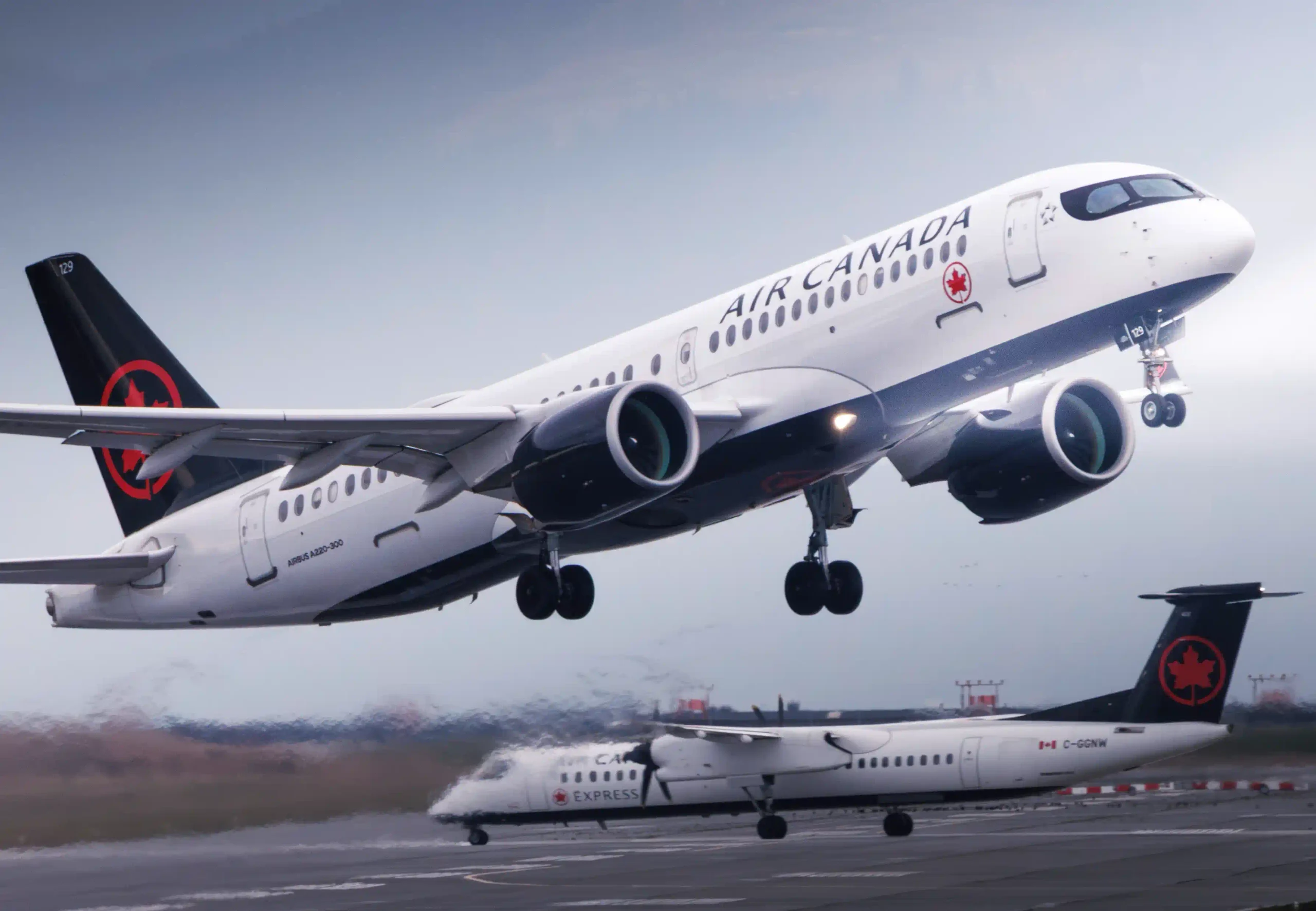

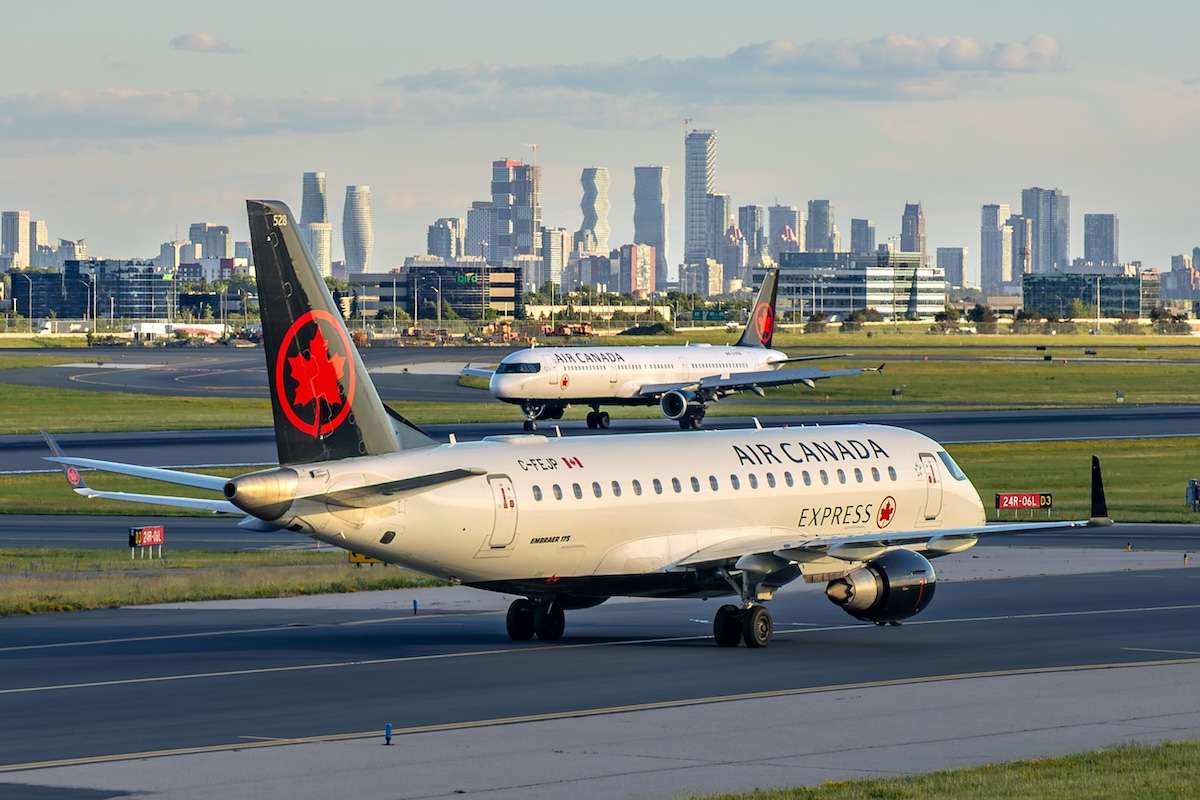
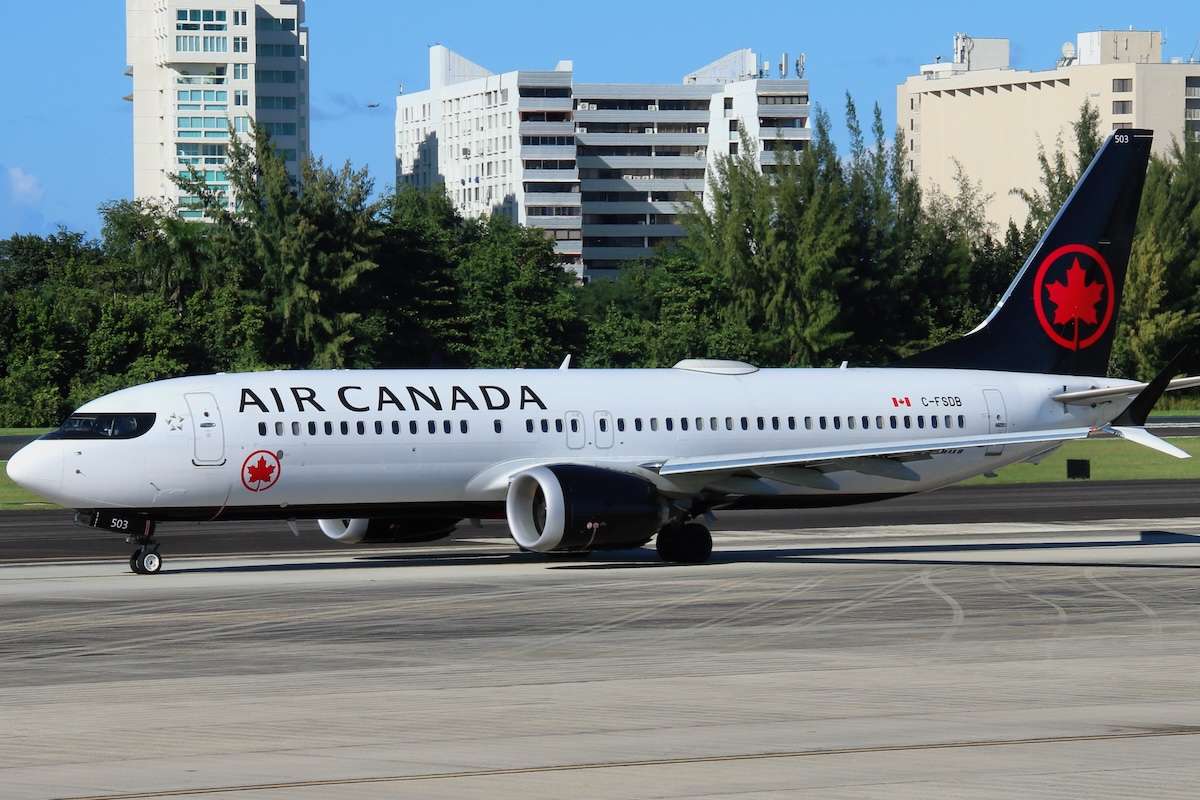
Air Canada
Airline Fact File
IATA / ICAOAC / ACA
Founded1937 (as Trans-Canada Air Lines)
HeadquartersSaint-Laurent, Montréal, QC
CEOMichael Rousseau (outgoing)
Anko Van der Werff (incoming Jan 2027)
Anko Van der Werff (incoming Jan 2027)
StockTSX: AC
AllianceStar Alliance (founding member)
LoyaltyAeroplan
Fleet (mainline)223
Destinations180+ airports
Primary hubs
YYZ
YUL
YVR
History & Founding
Air Canada traces its origins to 1937, when the Canadian federal government created Trans-Canada Air Lines (TCA). Passenger service began between Vancouver and Montréal on 1 April 1939, and 2 years later, TCA provided scheduled flights across the Atlantic Ocean. Over the following decades, it grew into Canada’s national carrier. In 1964, a private member’s bill changed the name from Trans-Canada Air Lines to Air Canada, taking effect on 1 January 1965.
The airline was privatised in 1988 under a program led by President and CEO Pierre Jeanniot, with 43% of shares sold to the public. By the same year, Air Canada had already made history as the first airline in the world to implement a fleet-wide non-smoking policy. In 2001, Air Canada acquired its largest rival, Canadian Airlines, cementing its position as the country’s dominant carrier.

1937
Trans-Canada Air Lines created

1939
First passenger service, Vancouver to Montréal

1965
Renamed Air Canada

1988
Privatised; first fleet-wide non-smoking airline

2001
Acquired Canadian Airlines

2003–04 (restart)
Bankruptcy protection, then restructuring
The early 2000s proved turbulent. Air Canada filed for bankruptcy protection in 2003 following the combined pressures of the September 11 attacks, the SARS outbreak, and soaring fuel costs, and emerged from restructuring in 2004. Since then, the airline has pursued sustained modernisation: fleet renewal, international network expansion, and the transformation of Aeroplan into one of Canada’s most active loyalty ecosystems.
In August 2025, Air Canada experienced a significant work stoppage when more than 10,000 flight attendants represented by the Canadian Union of Public Employees went on strike, beginning on 16 August and resulting in approximately 3,200 flight cancellations and an estimated revenue impact of C$430 million before a tentative agreement was reached on 19 August.
Fleet
Air Canada operates a mixed Airbus and Boeing mainline fleet (one of the youngest and most fuel-efficient in the world), supported by subsidiary operations under Air Canada Rouge and regional carrier Air Canada Express.
The airline’s long-haul workhorse is the Boeing 787 Dreamliner, with 40 in service and 18 additional 787-10 aircraft on order. Its growing narrow-body backbone is the Airbus A220-300, with 37 in service and 28 more on order. In December 2024, Air Canada announced it would transfer its Boeing 737 MAX 8 aircraft to Air Canada Rouge and integrate the Airbus A320/A321 fleet into its mainline operation, retrofitting those aircraft to A220 specifications.
Looking ahead, Air Canada has placed orders for 30 Airbus A321XLR extra-long-range jets (deliveries from Q1 2026) and 8 Airbus A350-1000s (deliveries from 2030–2032), expanding its long-haul capability.
Type
Role
Approx. in Fleet
Mainline fleet figures approximate as of mid-2025. Excludes Air Canada Rouge, Air Canada Express and Air Canada Jetz. A321XLR and 787-10 deliveries underway.
Route Network
Air Canada serves more than 180 airports in Canada, the United States and internationally across six continents. Domestically, it connects 50 Canadian airports, averaging over 528 daily flights. Internationally, the network spans Europe, Asia-Pacific, the Middle East, South America and the Caribbean, with Sixth Freedom traffic through its Canadian hubs representing a fast-growing revenue stream. Sixth Freedom revenues grew 10% year-on-year in Q4 2025.
Toronto Pearson (YYZ) is the primary hub and engine of the international network. Montréal-Trudeau (YUL) and Vancouver International (YVR) serve as secondary hubs with their own international flying programs. New routes announced for 2025 and into 2026 include service to Prague, Manila, Bermuda, Edinburgh, Naples, Rio de Janeiro, Nashville and more — across all three hubs.
Hub
Role
Primary hub; largest international gateway
Secondary hub; Francophone and European gateway
Pacific gateway; Sixth Freedom transpacific hub
Western Canada anchor
National capital gateway
Western Canada secondary hub
Safety Record & Incidents
Air Canada consistently ranks among the world’s safest airlines. The Jet Airliner Crash Data Evaluation Centre (JACDEC) has placed Air Canada in the global top five for safety, and AirlineRatings.com has awarded it a seven-out-of-seven safety rating. In 2025, Air Canada was named Best Airline in North America by Skytrax and recognised as the only North American carrier in the global top 20.
The airline has experienced only three fatal accidents since becoming Air Canada in 1965, across more than 4.75 million flights. Notable incidents include:
Otherwise, Air Canada has maintained a strong safety record across billions of passenger kilometres.
Financial Results
Air Canada posted record annual revenues in 2024 of $22.3 billion (CAD), driven by a five per cent increase in capacity over 2023. Full year 2025 revenues reached $22.4 billion (up 1% year-on-year), with adjusted EBITDA of $3.1 billion at a 14% margin, exceeding the airline’s own guidance. Cash from operations for 2025 was $3.7 billion, and the airline returned more than $850 million to shareholders through buybacks during the year.
$22.4B
Revenue+1% YoY

$3.1B
Adjusted EBITDA14% margin

$3.7B
Cash from operations

$850M+
Returned to share holders buy backs
Metric
Value
~$22.4 billion CAD
~$3.1 billion CAD (14% margin)
~$3.7 billion CAD
1.7×
$7.5 billion CAD
Operational Performance
Cabins & Product
Air Canada operates a three-cabin structure (Economy, Premium Economy and Business Class) across seven fare types. Product names and seat configurations vary by aircraft.
Change & Cancellation Policy
Air Canada’s change and cancellation policy varies by fare type.
Fees & Charges
Air Canada’s Economy Basic fare includes only one personal item (no standard carry-on) for travel within Canada and to/from the USA, Mexico, Central America and the Caribbean. On international itineraries beyond those regions, Basic fares retain full carry-on allowances. Domestic and transborder checked baggage fees were increased in April 2026.
Item
Economy Basic / Standard
Premium Economy / Business
Aeroplan Elite Status members, co-branded Aeroplan credit card holders and military personnel may receive additional baggage allowances. Check aircanada.com for current terms.
Pet Policy
Air Canada allows small domesticated cats and dogs to travel in the cabin or as checked baggage, subject to size, weight and breed restrictions.
Check-in & Boarding
Air Canada offers online check-in from 24 hours before departure via its website or mobile app. Drop-off at the airport is available up to four hours before departure.
Process
Details
24 hours before scheduled departure
Available up to 4 hours before departure
Typically 45–60 minutes before departure
Typically 15 minutes before departure
Zones 1–6; priority guests in Zones 1–2
Business Class / Signature Class; Aeroplan Super Elite and 75K
Aeroplan 50K and 35K; co-branded premium Aeroplan cardholders
Aeroplan 25K; preferred seat holders; families with children
General boarding by seat row
Priority boarding (Zones 1 and 2) provides dedicated lanes at most gates, allowing eligible passengers to board at any time once general boarding has commenced. Preboarding is available for passengers with disabilities or those requiring extra time.
Aeroplan Loyalty Programme
Aeroplan is Canada’s leading travel loyalty program, with over 10 million active members worldwide. Points are earned on Air Canada flights, with Star Alliance partners and through an extensive network of Aeroplan partners, including hotels, car rental companies, retail and financial partners. Points do not expire as long as the account has qualifying activity within 18 months.
Aeroplan Elite Status has five tiers, each with core benefits plus customisable select benefits:
Aeroplan co-branded credit cards (issued by TD, CIBC and American Express in Canada, and Chase in the US) earn Aeroplan points on everyday purchases and can count toward elite status qualification. The Aeroplan credit card (US) grants automatic 25K status in the year of sign-up, plus the following calendar year.
Customer Reviews & Reputation
Air Canada’s global reputation has climbed steadily in recent years. The airline was named Best Airline in North America at the 2025 Skytrax World Airline Awards and received a Five Star Global Airline Award at the 2025 APEX awards. It was also the only North American carrier ranked in the Skytrax global top 20, meaningful recognition for a flag carrier serving a relatively small home market against fierce competition.
Domestically, Air Canada’s reputation is more mixed. The airline has historically faced customer frustration over delays, cancellation handling and the complexity of its fare and fee structure. The August 2025 flight attendant strike reinforced concerns about labour relations and operational resilience.
On the product side, Air Canada Signature Class consistently draws strong reviews for its lie-flat seating and food-and-beverage program on long-haul routes. The launch of free Wi-Fi for Aeroplan members in 2025 was broadly welcomed. Aeroplan itself — particularly its travel credit card partnerships and the unique eUpgrade redemption ecosystem — is widely regarded as one of the most valuable airline loyalty programs in North America.
Air Canada News — Stay Updated
Follow Dj’s Aviation for the latest Air Canada updates, and all the aviation related news including fleet changes, route launches and cancellations, financial results and policy announcements.




Related News
Aircraft News
Latest Airlines News
Carrier strategy, fleet moves & financial updates
Aircraft News
Latest Aircraft News
Programmes, retrofits & next-gen narrowbodies
Route News
Latest Route Updates
New launches, cuts & network shifts
Freight Orders & Delivery
Latest Freight Orders & Delivery News
Cargo conversions, orders & deliveries