
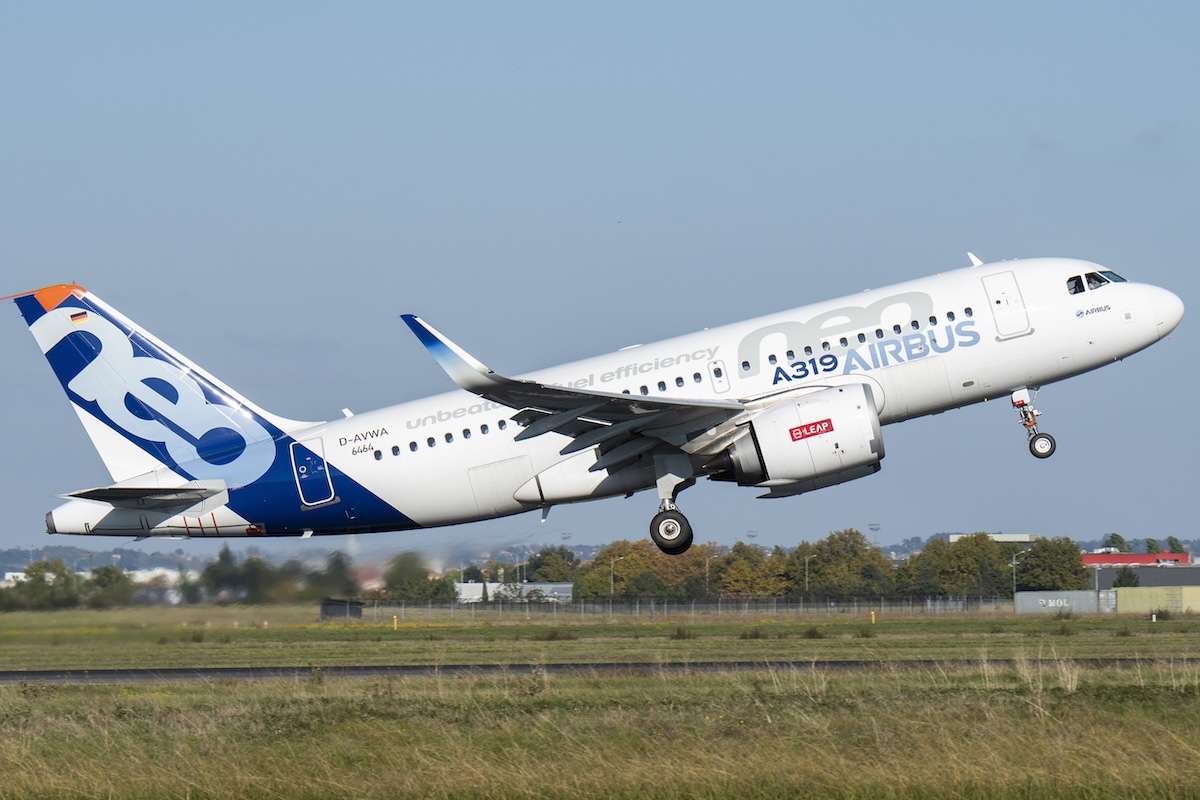
Airbus’ smallest member of the A320neo family, the A319neo, has quietly slipped through the exit door of the planemaker’s commercial offerings.
Flagged by recent reporting from FlightGlobal and other outlets, the aircraft has been overtaken by a shifting industry that’s more reliant on capacity, and the A220’s acquisition has put the model into a market of nothing.
As such, the tiny backlog for the aircraft has meant Airbus sees no future for the jet and would instead end production, a moment long in the making and one that raises questions about the jet’s business case since its conception.
A319neos Launch Back In The Day
Launched alongside the A320neo, the A319neo was intended to give operators a like-for-like replacement for the A319ceo and to represent a step down from the mid-market A320, with new-generation jets and a stronger fuel burn per seat.
In theory, Airbus’ decision regarding the A319neo made sense thanks to the platform’s strengths, including performance on shorter runways and even at high altitudes, while still equipped with the same neo technology that made its siblings successful.
However, by the time the model launched, the market had shifted rapidly, and airlines were no longer seeking smaller-capacity planes to meet rising industry demand. Even with the new engines, the smaller fuselage and cost per seat looked worse than the larger airframes available.
What became normal was airlines looking to manage demand in a more aggressive manner with the A320neo and then the A321neo being positioned as a much safer alternative with strong engine costs and ultimately more seats, meaning the A319neo’s role felt unnecessary.
A Poor Orderbook For The Jet
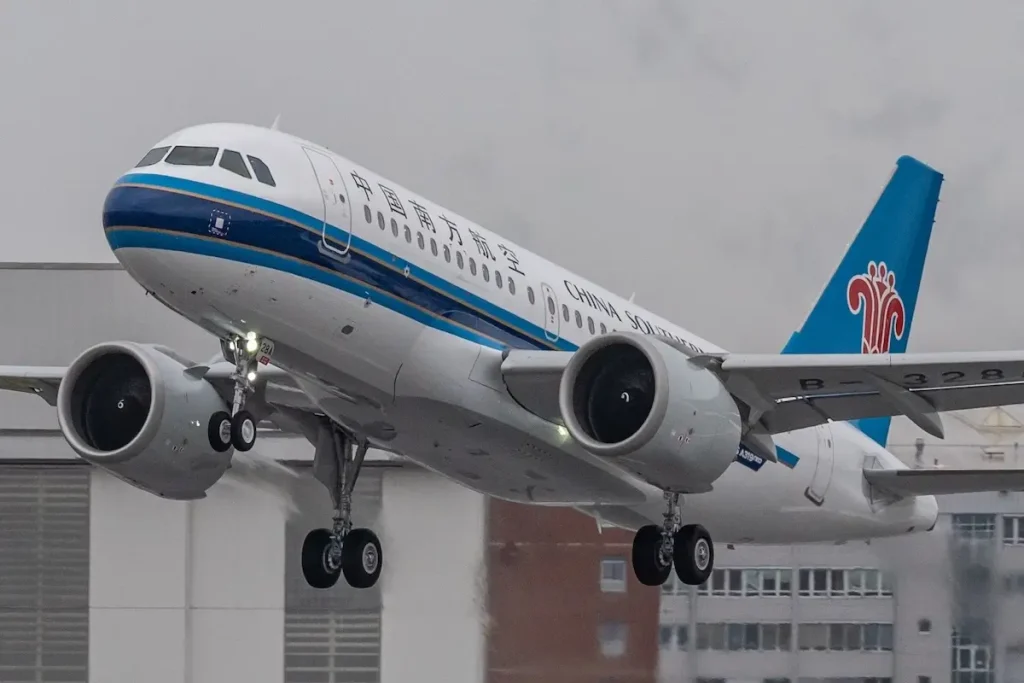
Most of the commercial orders for the A319neo are in China, where higher-altitude airports and short runways have given this model a niche in which it can succeed. Now that the niche is facing competition from COMAC, which is also developing a high-altitude version of its C919.
China Southern and Air China, however, valued the aircraft at the time because they allowed them to carry suitable payloads from higher-altitude airports, where larger jets struggled to do so efficiently.
However, it was outside that niche where the aircraft really struggled, despite sales pushes; the major Western orders expected never quite materialized, and the programme then became very hard to sustain, with no case for continuing it.
While the A319neo was unable to book even three-digit orders, the broader family has tallied in the tens of thousands, and the A321neo is becoming the manufacturer’s best-selling aircraft year after year. The just over 50 A319neos were disappointing and showed their lack of requirement within a changing industry.
What Is Going On Now?
Now in 2026, the A319neo’s fate, which has felt all but confirmed for some time, seems to be inching closer; the jet’s days are numbered, as the planemaker acknowledges that its declining relevance makes it neither needed nor a burden to retain.
The only rationale long put forward is the jet’s high-altitude performance, which, far from being valued by Chinese operators and a handful of others, isn’t valued by anyone else. Beyond that, it’s the ACJ offering for corporate jet customers.

With the A320neo family continuing deep into the 2030s, it is unlikely the A319neo will do the same, and as a result, the planemaker is preparing to offer its A320neo with enough upgrades to exceed or match what the smaller model can do.
These performance upgrades aren’t uncommon for planes. Once they enter service, they are typically pitched to grow the customer base and show existing customers that innovation is still happening. In this case, the upgrades are to effectively end a variant that has been a failure since conception.

ABOUT THE AUTHOR
Daniel Fowkes is a Melbourne-based aviation analyst and journalist with over a decade of industry experience. As founder of Dj’s Aviation, he delivers trusted analysis on aircraft, airline strategy and global aviation trends for djsaviation.net
Related Articles




Stay Informed
Get the latest aviation news, analysis and route updates delivered to your inbox.
We respect your privacy. Unsubscribe at any time.
Enjoyed this story?
Make us your go-to for aviation news
Add us as a preferred source on Google and see our latest stories first in Top Stories.
Add Us On Your News Feed