

Air India is celebrating the landmark return of a long-grounded Boeing 777-300ER to its fleet after six years parked.
The achievement also closes the chapter on the revival of all 30 legacy aircraft inherited from pre-privatisation days and, as a result, bolsters the bid to expand aggressively with another unit that can meet demand.
Air India’s 777 Long Restoration Journey
Grounded for over 5 years since February 2020 due to unserviceable systems and aging parts, VT-ALL, the Boeing 777-300ER, has been the centre of headlines, with its fate long unknown until May 2025.
Roughly mid-last year, the aircraft entered Air India’s AIESSL MRO facility in Nagpur, where it was positioned for a comprehensive top-to-bottom overhaul, with a focus on installing over 3,000 key components.

Additionally, over 4,000 maintenance tasks were completed, including 80 modifications such as Longeron structural reinforcement, major assemblies, and the replacement of engines, APU, inlet cowls, and thrust reversers.
However, it didn’t stop there, with the rebuild covering other essential systems such as avionics, hydraulics, and air conditioning, which were then rigorously tested under the oversight of the governing regulator, the DGCA, and Boeing, culminating in a test flight and, eventually, a permitted return to service with the flag carrier.
A Business That Works Together
The revival of VT-ALL is being headlined by the commitment from the broader Air India Group to make this happen with the seamless coordination of many pillars in order to get the jet back into the skies.
From base maintenance, planning, technical services, procurement and supply chain to the project management office, power plants, airports, management organisations, and quality assurance teams.
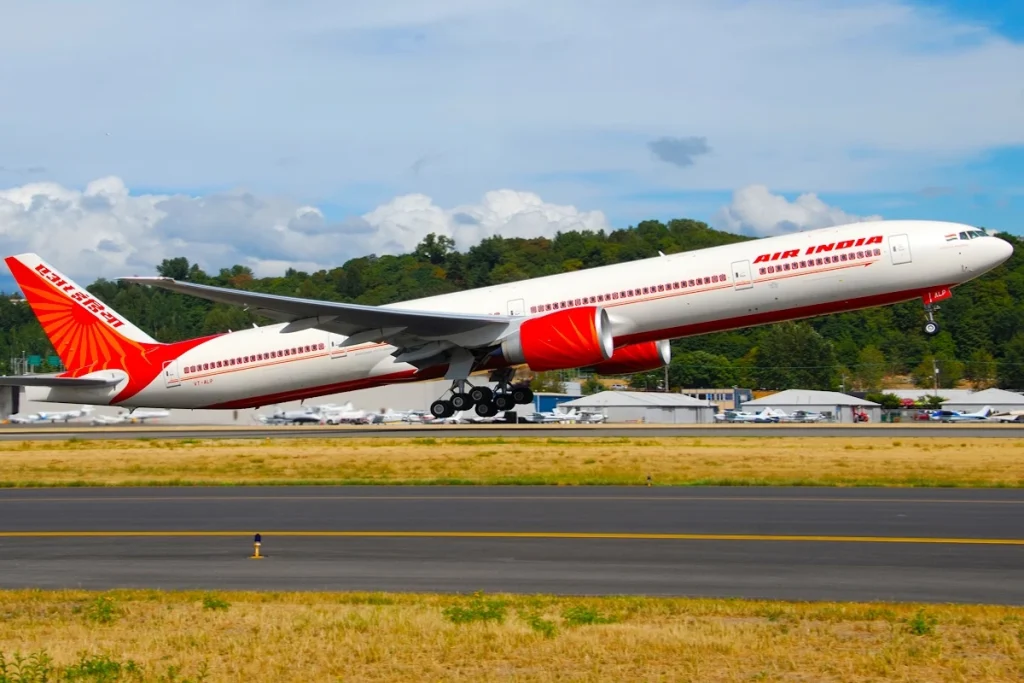
All these areas of the business combined their efforts to restore the aircraft in record time and to the highest possible safety standards, ensuring a highly reliable return.
The 777-300ER first joined the fleet in 2007 and has spent six years on the ground. During the near 12-month restoration effort, 3500 man-hours were invested in order to make the jet safe, and that included a hard cabin refresh.
A Boost For Passengers
For passengers, the return of VT-ALL means enhanced capacity on high-demand long-haul routes, helping support the Northern Summer 2026 schedule.
Air India has already committed to upgauging its service between Delhi and Melbourne, choosing to replace the Boeing 787 with the Boeing 777-300ER and thus reintroducing First Class suites to Australia.

This move meant bringing refurbished cabin interiors, rectifying seats and in-flight entertainment, and adding 400 square metres of carpet and 150 litres of paint to make up the three-class cabin configuration.
VT-ALL will, alongside the other legacy Boeing 777 aircraft in the fleet, eventually undergo a full retrofit, slated to commence in 2027 as part of a comprehensive $400 million programme to bring this widebody closer to existing next-generation models and those to be delivered in the coming years.

ABOUT THE AUTHOR
Daniel Fowkes is a Melbourne-based aviation analyst and journalist with over a decade of industry experience. As founder of Dj’s Aviation, he delivers trusted analysis on aircraft, airline strategy and global aviation trends for djsaviation.net
Related Articles




Stay Informed
Get the latest aviation news, analysis and route updates delivered to your inbox.
We respect your privacy. Unsubscribe at any time.
Enjoyed this story?
Make us your go-to for aviation news
Add us as a preferred source on Google and see our latest stories first in Top Stories.
Add Us On Your News Feed